- Ragtime is a sweeping musical based on E.L. Doctorow’s novel that intertwines the stories of three families at the turn of the 20th century while exploring themes of racism, immigration, class, and the American Dream.
- This article traces the history of Ragtime from its origins as an award-winning novel to its acclaimed Broadway productions, including the original 1998 run, the 2009 revival, and major concert presentations that have kept the musical relevant for new generations.
- As the musical returns to Broadway at Lincoln Center’s Vivian Beaumont Theater, the story’s examination of social change, political division, and hope for a better future continues to resonate with audiences more than a century after its setting.
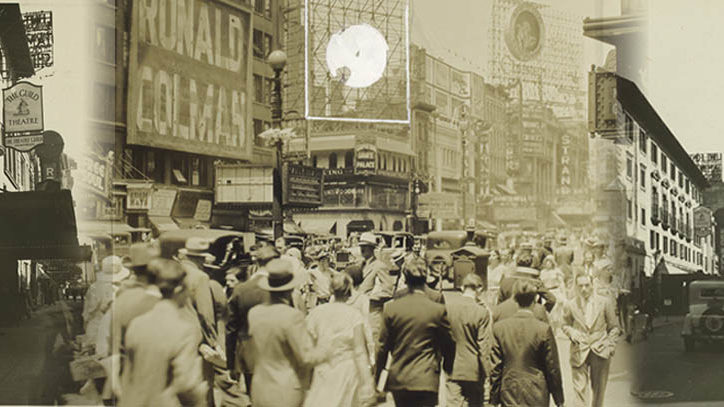
A polarized political landscape, rapidly evolving technology, police brutality, racial violence, corporate greed, and an immigrant father venturing to the Land of Opportunity with hopes of a better life for his daughter. It sounds like a contemporary musical examining the current state of America — and yet, the Broadway musical Ragtime is set 125 years ago. The musical’s title tips its hat to the musical genre that had newly arrived on the scene at the turn of the century and captured the spirit of change in the air. To quote the musical itself, “It was the music of something beginning.”
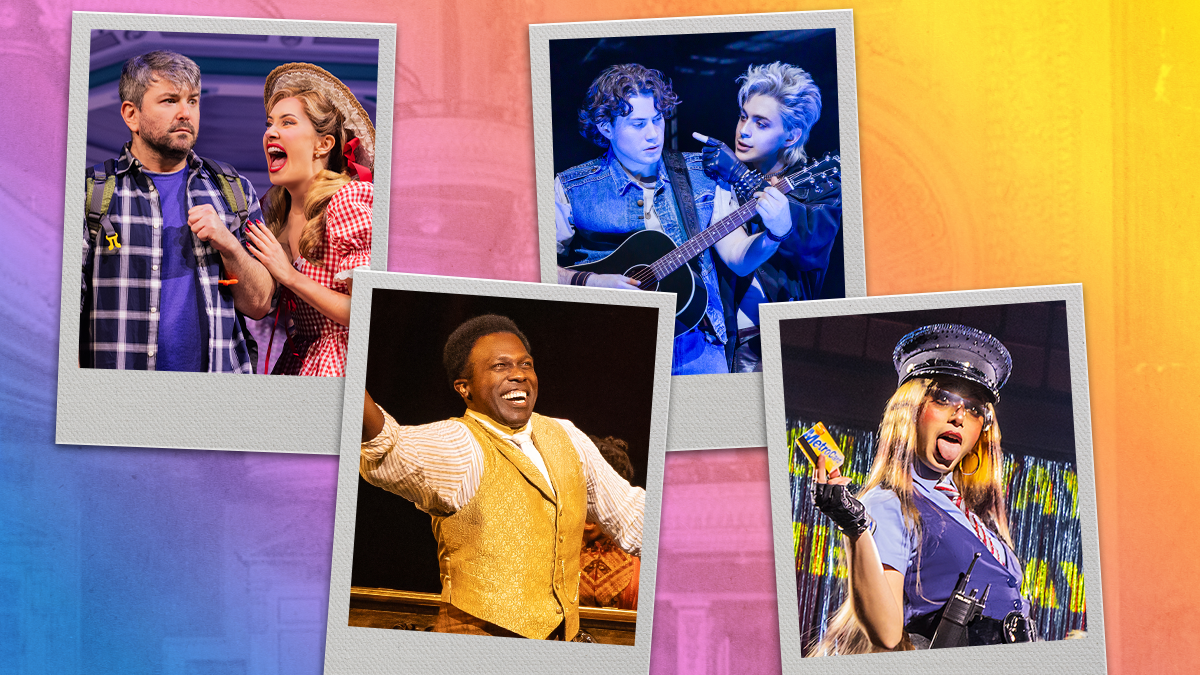
Audiences can experience Ragtime anew with the upcoming Broadway revival at Lincoln Center’s Vivian Beaumont Theater, set to begin previews September 26 and officially open October 16. This production features beloved musical theater stars, including Caissie Levy as Mother, Joshua Henry as Coalhouse Walker Jr., Nichelle Lewis as Sarah, and Brandon Uranowitz as Tateh. They lead a powerhouse cast of 33 who will deliver soaring vocals, a soul-stirring score, and a heart-wrenching story.
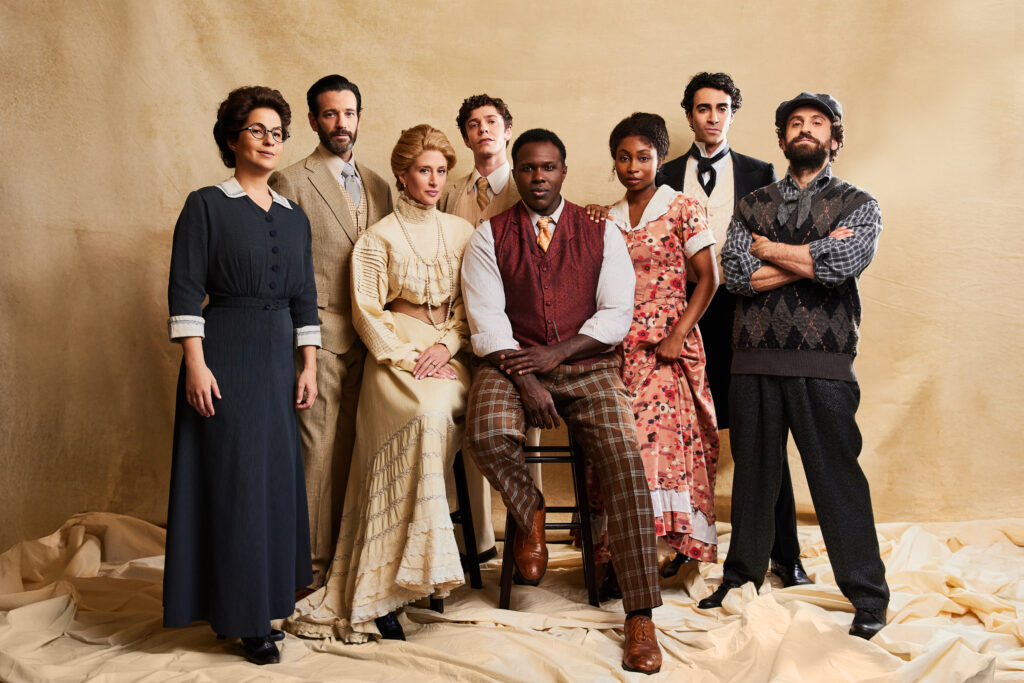
The musical, with a score by Lynn Ahrens and Stephen Flaherty and a book by Terrence McNally, is based on E.L. Doctorow’s 1975 novel of the same name. Inspired by his own house in New Rochelle, New York, Doctorow began writing Ragtime as a remedy for his writer’s block by imagining what his neighborhood was like in the early 1900s. His cure transformed into a historical novel that won several awards, including the 1975 National Book Critics Circle Award for fiction. The novel was adapted into a film in 1981, starring Debbie Allen, James Cagney, and Mary Steenburgen, and went on to earn eight Academy Award nominations.
The plot centers on three families in the New York City area in the early 1900s, each navigating America’s changing sociopolitical landscape. The country’s status quo and the families are introduced by way of the musical’s opening number, “Prologue: Ragtime.” Mother, Father, and the rest of their white, upper-class family of New Rochelle are content with the existing state of America; Coalhouse Walker Jr., Sarah, and the Black residents of Harlem are reaching toward a more equitable and just future for America; and Tateh, his daughter, and thousands of Eastern European immigrants are arriving at Ellis Island, full of hope and optimism at the promise of the American Dream.
The story also features cameos from historical figures, such as Booker T. Washington, Evelyn Nesbit, Emma Goldman, Harry Houdini, Henry Ford, and J.P. Morgan. Their appearances integrate real-life events into the plot, establishing a true sense of time and place as the fictional characters’ stories unfold. With these intertwining narratives, the story manages to touch on a myriad of themes that are both era-specific and timeless: racism, capitalism, immigration, classism, celebrity culture, and labor reform, just to name a few.
Such rich source material was clearly ripe for the heightened emotional nature of musical theater, and producer Garth Drabinsky seemed to think so too. He and the late McNally reached out to songwriting teams to audition to compose the musical’s score.
“The challenge was to write and demo four songs, based on a treatment for the musical that Terrence had written,” Ahrens said to Playbill in 2023. “Those first songs were ‘Ragtime,’ ‘Till We Reach That Day,’ ‘Gliding,’ and a song for Evelyn Nesbit. The first three eventually made it into the show, which is something of a miracle.”
After several workshops and readings, Ragtime made its world premiere at Toronto’s Ford Centre for the Performing Arts (now called the Meridian Arts Centre) in December 1996, before moving to Los Angeles for its American premiere in June 1997.
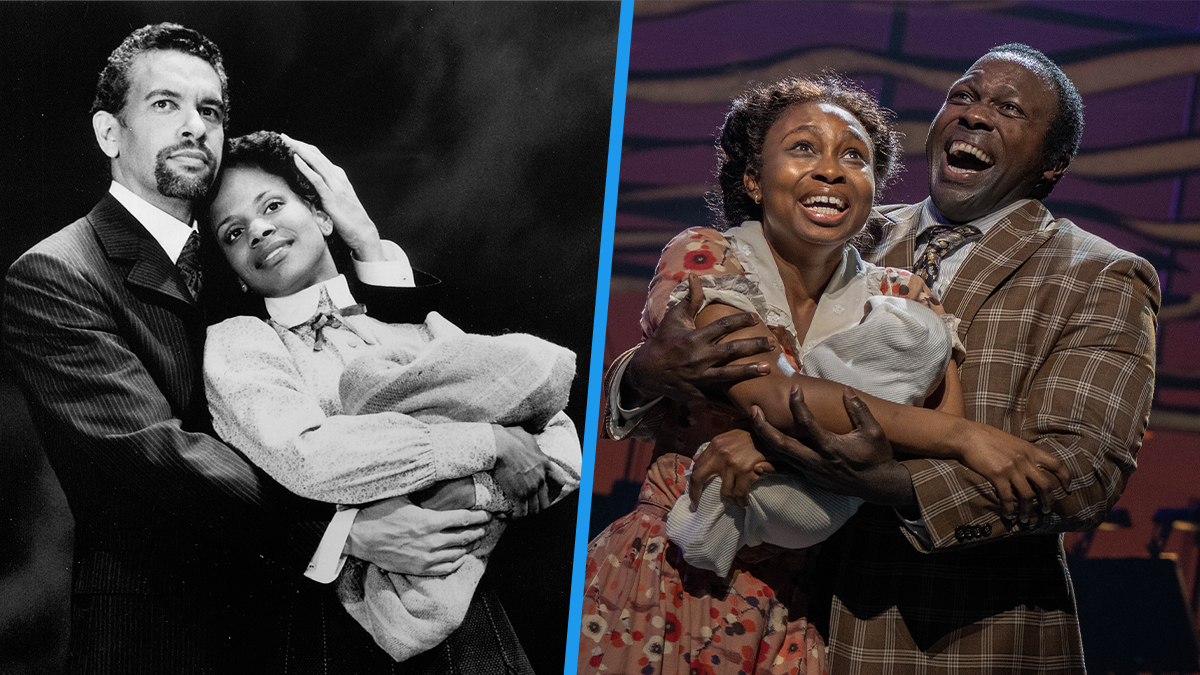
Though there were changes between the Toronto and Los Angeles casts, the majority of the Toronto cast reprised their roles for the musical’s Broadway debut. It was an all-star cast that included Marin Mazzie as Mother, Brian Stokes Mitchell as Coalhouse Walker Jr., Audra McDonald as Sarah, and Peter Friedman as Tateh.
Directed by Frank Galati and choreographed by Graciela Daniele, Ragtime began Broadway previews on December 26, 1997, and officially opened at the newly opened Ford Center for the Performing Arts (now the Lyric Theatre) on January 18, 1998. Though the original production received mixed reviews, Ragtime became a favorite among audiences, and it ran for 834 performances.
The production was nominated for 13 Tony Awards, winning four. McNally won Best Book of a Musical, Ahrens and Flaherty won Best Score, William David Brohn won for Best Orchestrations, and McDonald won the Tony Award for Best Performance by a Featured Actress in a Musical.
Just over a decade later, the first Broadway revival opened on November 15, 2009, at the Neil Simon Theatre. This production, directed and choreographed by Marcia Milgrom Dodge, originated with a run at Washington, D.C.’s John F. Kennedy Center for the Performing Arts. The cast included Christiane Noll as Mother, Quentin Earl Derrington as Coalhouse Walker Jr., Stephanie Umoh as Sarah, and Robert Petkoff as Tateh. The revival ran on Broadway for only 65 performances, but still received seven Tony Award nominations.
Though a century had passed from the musical’s setting, Dodge’s directorial vision for the production stemmed from the producers’ request to “make it a Ragtime for now,” focused on the hypocrisies and injustices that still plagued America while maintaining a sense of optimism, which perhaps felt apt against the backdrop of newly elected President Barack Obama. She told The New York Times, “People identify with the timeliness, the idea that America is still the land of dreams… The sociopolitical themes that run rampant through this story are still happening now. There is still bigotry, and we are in a huge economic disaster. Yet, at the same time, we are hopeful because we elected a [B]lack man as president, and he just won the Nobel Peace Prize.”
President Obama got to experience the anthemic “Wheels of a Dream” for himself on October 14, 2015, when McDonald and Mitchell performed as a part of “In Performance at the White House,” a series hosted by the president and Michelle Obama that “celebrate[d] the many and varied musical traditions in America.”
Mitchell said of the night, “It was an incredible experience, standing less than 10 feet from an African American president… It gave new meaning to the words ‘And my son will ride on wheels of a dream.’”
Ragtime continued to demonstrate its relevance, especially with a one-night-only concert on August 8, 2016. The summer had sizzled with escalated conversations around police brutality and a divisive campaign season ahead of the 2016 presidential election between Hillary Clinton and Donald Trump.
Director Sammi Cannold helmed the site-specific Ragtime on Ellis Island, which starred Mitchell as the narrator, Laura Michelle Kelly as Mother, Brandon Victor Dixon as Coalhouse Walker Jr., Aisha Jackson as Sarah, and Petkoff reprising his role as Tateh from the 2009 Broadway production.
To celebrate Ragtime’s 25th anniversary, the original Broadway cast reunited for a benefit concert on March 27, 2023. Original company members who had passed away were honored, including Mazzie, whose part of Mother was performed by Kelli O’Hara. The concert raised more than $1 million for the Entertainment Community Fund.
Though Ragtime is seemingly relevant during any era, New York City Center’s 2024 gala presentation, overlapping with America’s 2024 presidential election, illuminated how many of the show’s themes are still prevalent in present-day political discussions. This timing was intentional by its director, Lear deBessonet, who is known for her social activism and community-oriented lens, especially as founder of the Public Theater’s civic artistic program, Public Works.
“We always make art for community. We make it because we want it to mean something in other people’s lives,” said deBessonet at the Ragtime revival’s first rehearsal. “We also want people of different experiences, different backgrounds, different views on the world to actually share a space.”
Now, with the upcoming Broadway transfer to Lincoln Center also directed by deBessonet, Ragtime will once again hold up a mirror to reflect the parallels of the nation’s past, present, and future.