$
The Booth Theatre.

Now Playing

Strictly limited engagement. Ayo Edebiri and Don Cheadle in PROOF by David Auburn. Directed by Thomas Kail.

Ticket Information

Box Office Hours
Monday-Saturday: 10:00 AM-8:00 PM
Sunday: 12:00 PM-6:00 PM

Tickets
Purchase official Proof tickets online, at the official Booth theatre box office, or by calling 212-239-6200.

Group Tickets (10+)
Book online or call 800-714-8452. Groups of 10 or more can book group tickets to Proof at the Booth Theatre, with support on dates, seating, and Broadway group ticket options for school trips, organisations, and special events in NYC.


Location


About This Theatre

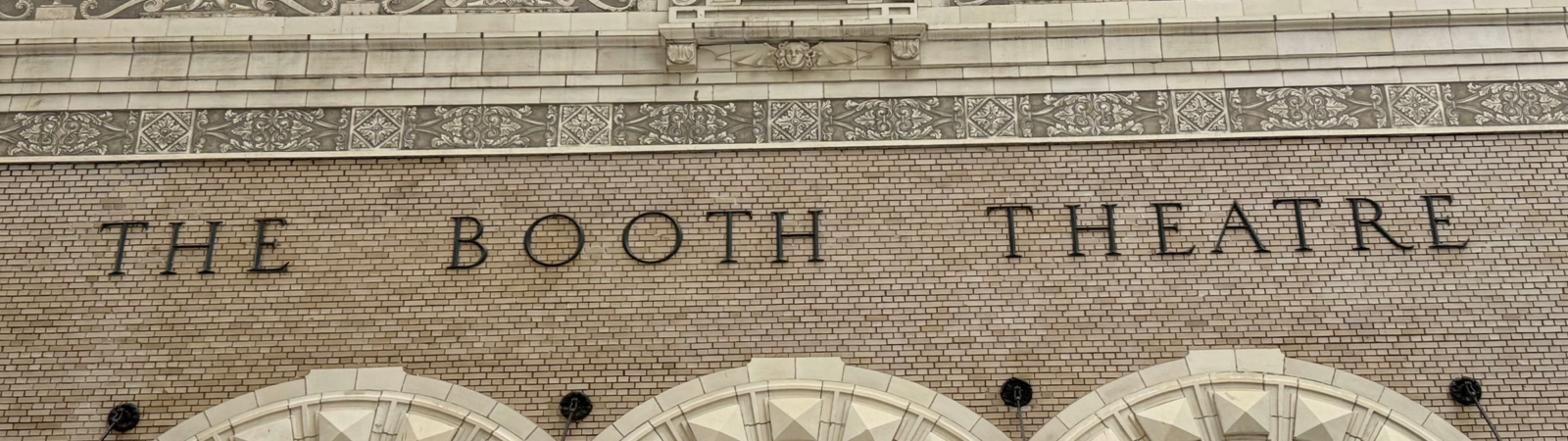
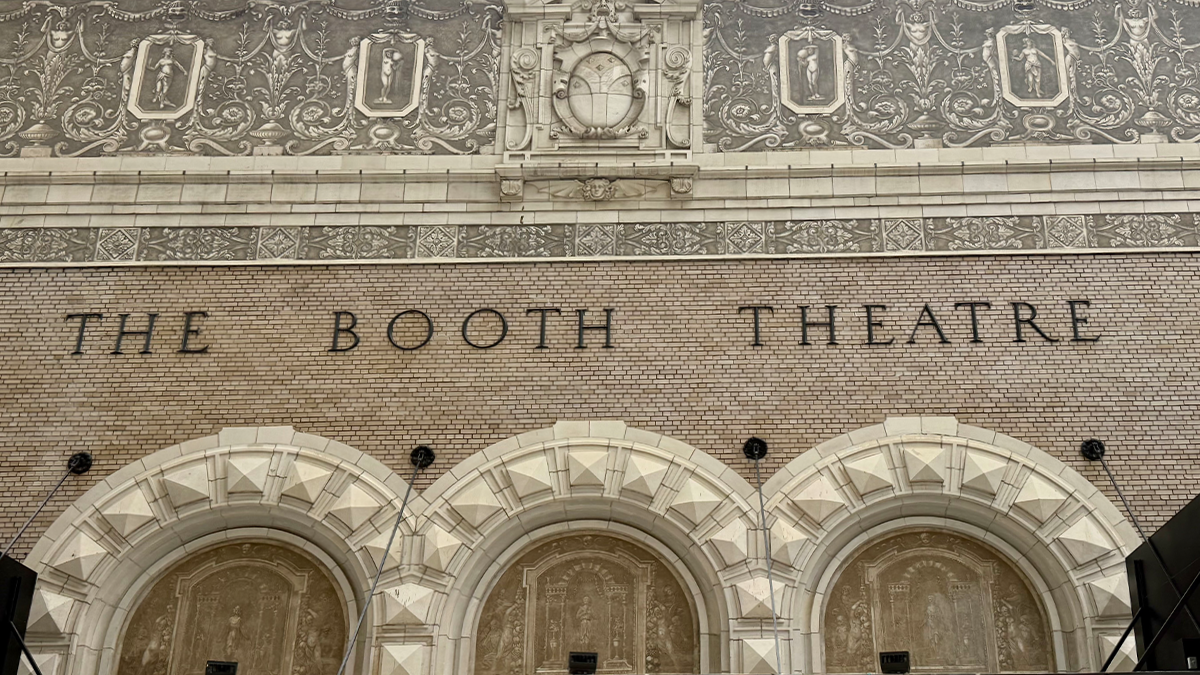
Lee Shubert built the Booth Theatre in partnership with the producer Winthrop Ames. Named for the actor Edwin Booth (1833–1893), brother of the infamous John Wilkes Booth, the venue was actually the second New York theatre to bear this name. The first was built by Booth himself in 1869 on 23rd Street and 6th Avenue. Ames’s father had been devoted to preserving the actor’s legacy, so Winthrop’s decision to name this theatre after Booth honored not only the actor, but it connected his own family’s interest with the actor’s rich theatrical history. Ames intended to present the most challenging and prestigious productions possible here.

The Booth Theatre has 800 seats and is one of the Shubert Organization‘s 17 Broadway theatres.


Proof

Experience Proof on Broadway at the Booth Theatre, where this Pulitzer Prize and Tony Award-winning play returns to NYC in a powerful new revival. Starring Ayo Edebiri and Don Cheadle and directed by Thomas Kail, this landmark production brings a gripping story of brilliance and belief to the heart of the Theatre District. Plan your visit to the Booth Theatre and find official Proof Broadway tickets, seating information, and group ticket options for your next New York theatre experience.


Partners
Audience Rewards

spothero logo

Back To Top


Policies

Dress Code
There is no dress code at the theatre. Formal attire is not required. For all performances, attire should be comfortable and appropriate for the occasion.

Children
Children under the age of 4 will not be permitted in the theatre.

Late Seating
Latecomers will be seated at the discretion of management.

Prohibited Items
No weapons permitted on the premises. No outside food or beverages, electric scooters, e-bikes, or battery-powered transportation devices, except when medically necessary.

All items are subject to inspection. Anything brought into the theatre must fit on your lap or completely under your seat without blocking any aisles. Avoid bringing packages, luggage, and backpacks. Some items must be checked.

No Recording
The use of cameras, cell phones, and other recording devices during the show is strictly prohibited by law, except when used for accessibility services.


Amenities

Restrooms
A wheelchair-accessible restroom is located on the main level. The women’s restroom is located in the lower lounge and upstairs in the Mezzanine. The men’s restroom is located in the lower lounge.

Cloakroom
There is cloakroom service available at this theatre. No strollers or furs.


Parking

Broadway Direct has partnered with SpotHero to provide guests with convenient and affordable parking. Please use the calendar below to reserve parking ahead of your upcoming show.

Back To Top


Accessible Seating

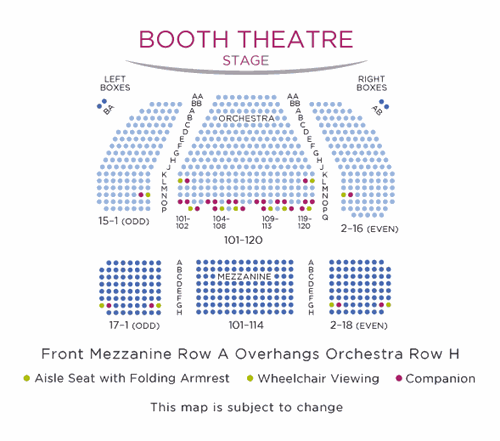
Accessible seating is available for this performance as indicated on the seating map.

The theatre is not completely wheelchair-accessible.


Wheelchair-Accessible Restroom

There is one (unisex) wheelchair-accessible restroom located on the main level.


Seat Accessibility

Orchestra location: Seating is accessible to all parts of the Orchestra without steps. Wheelchair seating is located in the Orchestra only.

Mezzanine location: Located up two flights of stairs (31 steps). Please note, once on the Mezzanine level there are approximately two steps up and down per row. Entrance to Mezzanine is behind row H.

Handrails: Available at the end of every stepped seat row in the Mezzanine.


Assisted-Listening Devices

Reservations are not necessary. A driver’s license or ID with printed address is required as a deposit. Please e-mail [email protected] or call: 212-582-7678 to reserve in advance.

Loop technology is also available at this theatre.

Shubert Audience Services
The Booth Theatre provides accommodations for patrons who are blind, deaf, partially sighted, and/or have hearing loss. The theatre provides infrared assistive listening devices for every performance at the theatre. In addition, beginning four weeks after a show’s official opening night performance, hand-held audio description devices and hand-held captioning devices are available, and there is unlimited access to downloadable audio description and/or captioning for personal mobile devices free of charge. (Hand-held devices are limited, although additional devices can be obtained with at least twenty-four hours’ notice.) If you have questions, contact Shubert Audience Services at 212-944-3700 or [email protected]. There is also a representative at the Shubert Audience Services kiosk at every performance to assist any patron with any of our devices, software, or technology.

Back To Top

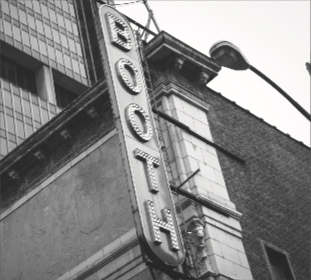
Booth Theatre History ImageBuilt by Lee Shubert and producer Winthrop Ames — and named for actor Edwin Booth — this warm, intimate Shubert theatre opened on October 16, 1913, with The Great Adventure.

The most recent productions here were Amy Schumer in Meteor Shower; Significant Other; Les Liaisons Dangereuses; An Act of God; Hughie; Hand to God; The Elephant Man starring Bradley Cooper; The Velocity of Autumn; a revival of The Glass Menagerie; and I’ll Eat You Last: A Chat With Sue Mengers, starring Bette Midler.

Jon Robin Baitz’s Other Desert Cities was the fifth Lincoln Center Theater production to play the Booth, after Dividing the Estate, Edward Albee’s Seascape, Via Dolorosa, and a revival of The Most Happy Fella. Other recent productions have included a revival of Who’s Afraid of Virginia Woolf? starring Tracy Letts and Amy Morton; High, with Kathleen Turner; the Tony and Pulitzer Prize winner Next to Normal; The Story of My Life; Thurgood; The Seafarer; The Year of Magical Thinking; Butley; Faith Healer; The Pillowman; The Good Body; The Retreat From Moscow; Our Town starring Paul Newman; Bea Arthur on Broadway: Just Between Friends; the return engagement of The Search for Signs of Intelligent Life in the Universe; and Dame Edna: The Royal Tour.

In the 1990s, An Evening With Jerry Herman; The Old Neighborhood; Jackie Mason’s Love Thy Neighbor; Having Our Say; Broken Glass; Someone Who’ll Watch Over Me; and Once on This Island all played here. The 1980s saw Tru; Shirley Valentine; Michael Feinstein in Concert: Isn’t It Romantic; A Walk in the Woods with Sam Waterston and Robert Prosky; I’m Not Rappaport (Tonys for Best Play and Best Actor Judd Hirsch); Sunday in the Park with George; Al Pacino in American Buffalo; Richard Dreyfuss in Total Abandon; Good; and Mass Appeal. In 1979, The Elephant Man moved here from Off-Broadway. From 1976 to 1978, this theatre housed

For Colored Girls Who Have Considered Suicide/When the Rainbow Is Enuf. Other highlights of the 1970s included a revival of Jerome Kern’s Very Good Eddie; All Over Town, directed by Dustin Hoffman and starring Cleavon Little; Terrence McNally’s Bad Habits; and That Championship Season.

The 1960s brought Leonard Gershe’s Butterflies Are Free, starring Eileen Heckart, Keir Dullea, and Blythe Danner; Harold Pinter’s The Birthday Party; Flanders and Swann in At the Drop of Another Hat; Luv, directed by Mike Nichols; and Julie Harris, Walter Matthau, and William Shatner in A Shot in the Dark.

Paddy Chayefsky’s The Tenth Man; Two for the Seesaw, with Henry Fonda and Anne Bancroft; Gore Vidal’s Visit to a Small Planet; An Evening With Beatrice Lillie; and Come Back, Little Sheba with Shirley Booth and Sidney Blackmer winning Tonys, all played the Booth in the 1950s.

Early hits here included The Lunts in The Guardsman (1924), Pulitzer winners You Can’t Take It With You (1936) and The Time of Your Life (1939), and The Two Mrs. Carrolls (1943).

Used with permission by Playbill, Inc. Playbill is a registered trademark.

Back To Top