100 years ago, against a backdrop of the Harlem Renaissance and New Negro Movement, historian Dr. Carter G. Woodson launched Negro History Week as a way to teach and celebrate Black history. In 1969, the week expanded into Black History Month.
Though the history of Black theatrical storytelling extends well before 1926 and well beyond Broadway, there’s no question that the 1920s marked quite a turn. The groundbreaking 1921 musical revue Shuffle Along was an era-defining success featuring an all-Black cast and writing team on Broadway. Since then, a breadth of Black stories has been woven into the fabric of Broadway history that continues to grow and strengthen.
With this year’s Black History Month theme being “A Century of Black History Commemorations,” Broadway Direct is highlighting 11 milestones — one from each decade — to celebrate Black history-makers and barrier-breakers on Broadway.
1920s: First Nonmusical Play Written by a Black Playwright Opens on Broadway
The Chip Woman’s Fortune, a one-act written by playwright Willis Richardson, became the first nonmusical play by a Black playwright to be produced on Broadway, in 1923.
1930s: Perry Watkins Becomes First Black Scenic Designer for Broadway
During the Great Depression, President Franklin D. Roosevelt’s Works Progress Administration launched the Federal Theatre Project, which established the Negro Theatre Project (NTP). Perry Watkins was accepted into the NTP in 1936, and three years later, he became the first Black scenic designer to work on Broadway, with the show Mamba’s Daughters. He then became the first Black designer to be accepted into the United Scenic Artists Union.
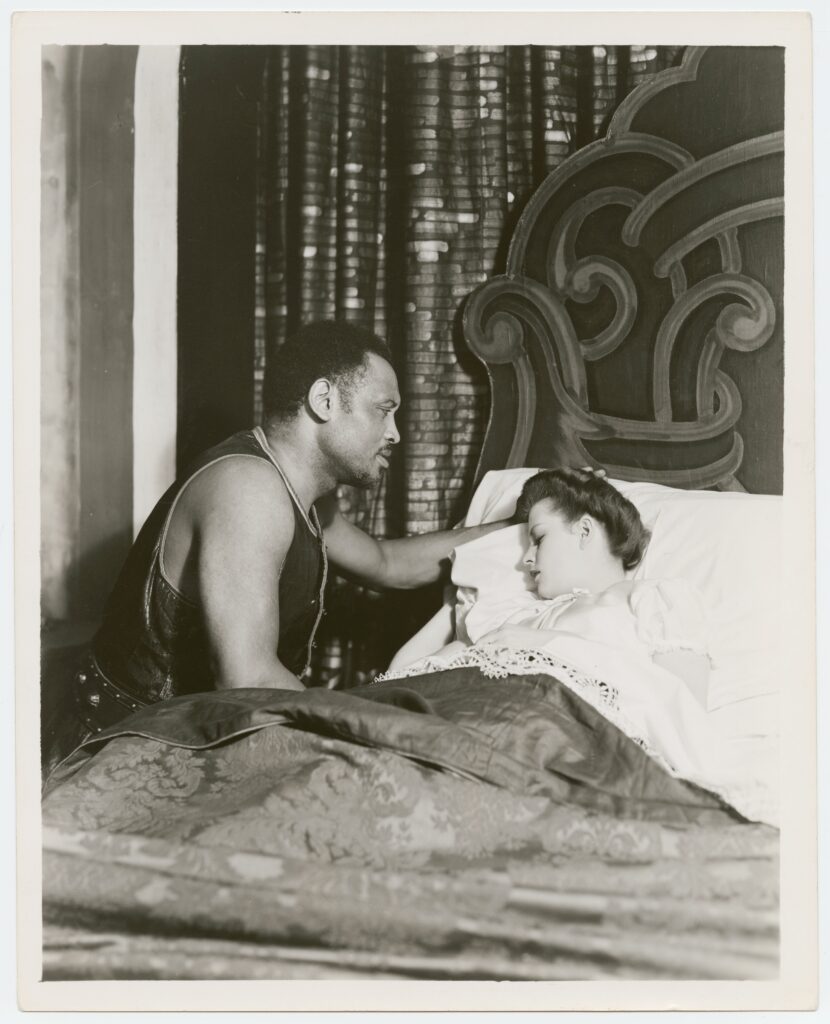
1940s: Paul Robeson Stars as Othello
In 1943, actor and activist Paul Robeson became the first Black actor to play the titular role in Othello on Broadway. The production ran for 296 performances, which still holds the record for longest-running Shakespeare play on Broadway.
1950s: Lorraine Hansberry Becomes First Black Woman Playwright on Broadway
With her landmark play A Raisin in the Sun, playwright Lorraine Hansberry made history as the first Black woman to have a play produced on Broadway. The play premiered on March 11, 1959, starring Sidney Poitier and Ruby Dee. It ran for 530 performances and was nominated for four Tony Awards, including Best Play.
1960s: Pearl Bailey Leads All-Black Cast of Hello, Dolly! and Earns Special Tony Award
Hello, Dolly!, starring Carol Channing, became an instant hit when it premiered on Broadway in 1964. Three years later, the production was redeveloped to feature an all-Black cast, with Pearl Bailey in the titular role. New York Times critic Clive Barnes wrote in his review, “For Miss Bailey this was a Broadway triumph for the history books.” President Lyndon B. Johnson and First Lady Lady Bird Johnson even attended a performance. The new iteration was so successful, the production recorded a new cast album, and Bailey received a Special Tony Award in 1968.
1970s: Vinnette Caroll and Micki Grant Lead Black Broadway Renaissance
The 1970s marked an explosion of Black musicals on Broadway, including revues such as Ain’t Misbehavin’, Bubbling Brown Sugar, Eubie!, and Me & Bessie.
There were also musical adaptations of beloved properties: Purlie was based on Ossie Davis’s Purlie Victorious; Raisin was based on Lorraine Hansberry’s A Raisin in the Sun; and smash hit The Wiz was based on L. Frank Baum’s The Wizard of Oz. There were even revivals, like the all-Black Guys and Dolls, the Bailey-led return of Hello, Dolly!, and Timbuktu!, a Mali-set version of Kismet
Original musicals were also flourishing on Broadway, including Melvin Van Peebles’s Ain’t Supposed to Die a Natural Death; Micki Grant’s Don’t Bother Me, I Can’t Cope; Peebles’s Don’t Play Us Cheap; Scott Joplin’s 1911 opera Treemonisha; and the Your Arms Are Too Short to Box With God, written by Alex Bradford, Vinnette Carroll, and Grant.
Grant became the first woman to write the book, music, and lyrics for a musical, with Don’t Bother Me, I Can’t Cope, and went on to become the first Black woman to receive Tony Award nominations for Best Book and Best Original Score. The musical’s director, Carroll, also made history as the first Black woman to direct a production on Broadway, and going on to receive a Tony Award nomination.
1980s: August Wilson Makes His Broadway Debut
In 1984, playwright August Wilson made his Broadway debut with a production of Ma Rainey’s Black Bottom, launching a prolific career, body of work, and legacy. Wilson is best known for his 10-play “The Century Cycle” series (or “The Pittsburgh Cycle”), which documented Black American experiences during the 20th century, mostly set in Pittsburgh. The series includes Fences and The Piano Lesson, which, like Ma Rainey, have received Broadway revivals and film adaptations. Two weeks after he passed away in 2005, Wilson became the first Black person to have a Broadway theatre named after him. This spring, a revival of Joe Turner’s Come and Gone, starring Taraji P. Henson and Cedric the Entertainer, will return to Broadway.
1990s: Audra McDonald Wins Her First Tony Award
Winning the Best Featured Actress in a Musical Tony Award for her performance as Carrie Pipperidge in the 1994 revival of Carousel unknowingly set Audra McDonald on her journey toward setting two Tony Award records. With her 2014 Best Leading Actress in a Play win for Lady Day at Emerson’s Bar and Grill, McDonald became the first actor to ever win six Tony Awards, and across all four acting categories. Her wins include Best Featured Actress in a Play for Master Class, Best Featured Actress in a Musical for Ragtime, Best Featured Actress in a Play for A Raisin in the Sun, and Best Leading Actress in a Musical for Porgy and Bess.
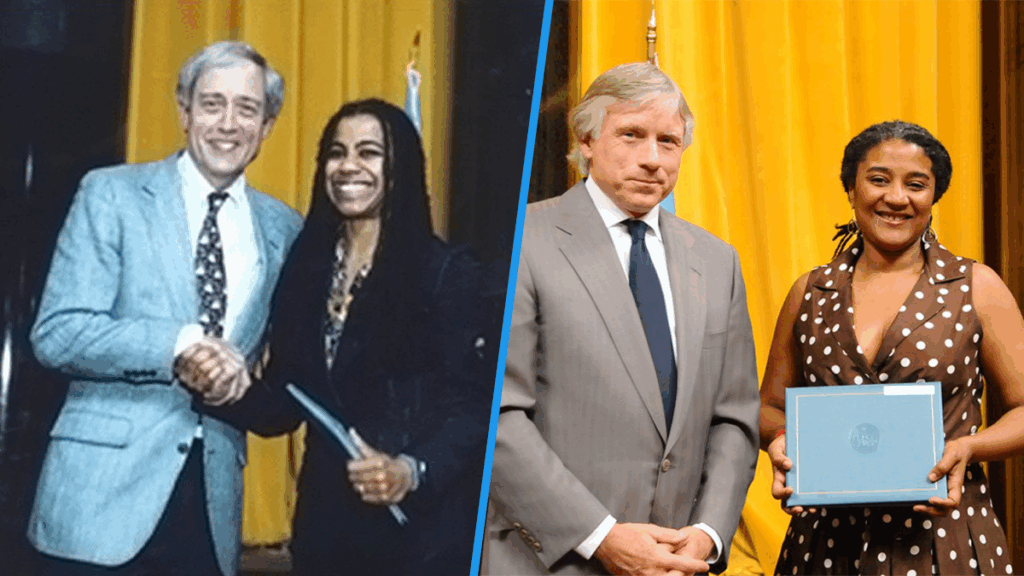
2000s: Suzan-Lori Parks and Lynn Nottage Make Pulitzer Prize History
In 2002, playwright Suzan-Lori-Parks made history when she won the Pulitzer Prize for Drama with her play Topdog/Underdog. Seven years later, in 2009, playwright Lynn Nottage won the same award for her play Ruined. That first win helped Nottage enter the history books in 2017, when she won the Pulitzer Prize for Drama with her play Sweat, making her the first woman to win the award twice.
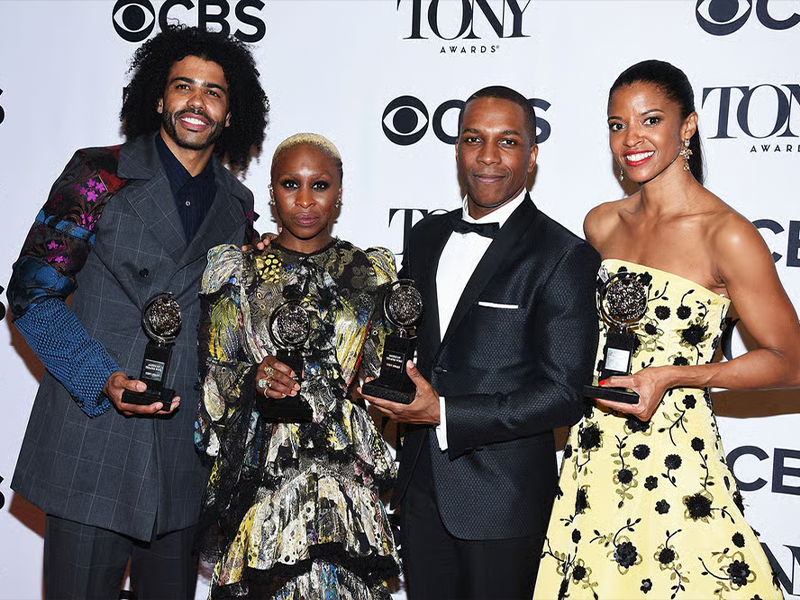
2010s: Four Black Actors Win All Four Musical Acting Tony Awards
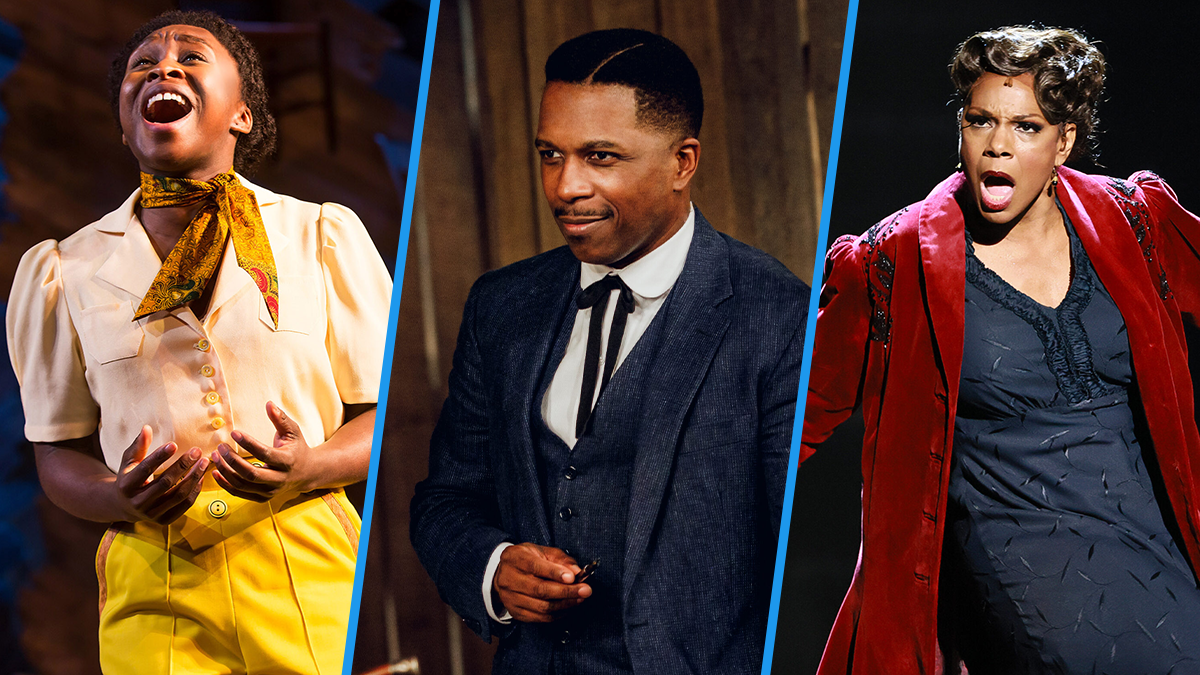
History was certainly happening in Manhattan during the 2016 Tony Awards! For the first time in history, all four musical acting categories were awarded to Black actors. From Hamilton, Leslie Odom Jr. won best leading actor, Daveed Diggs won best featured actor, and Renée Elise Goldsberry won best featured actress. And Cynthia Erivo won best leading actress for her performance in The Color Purple.
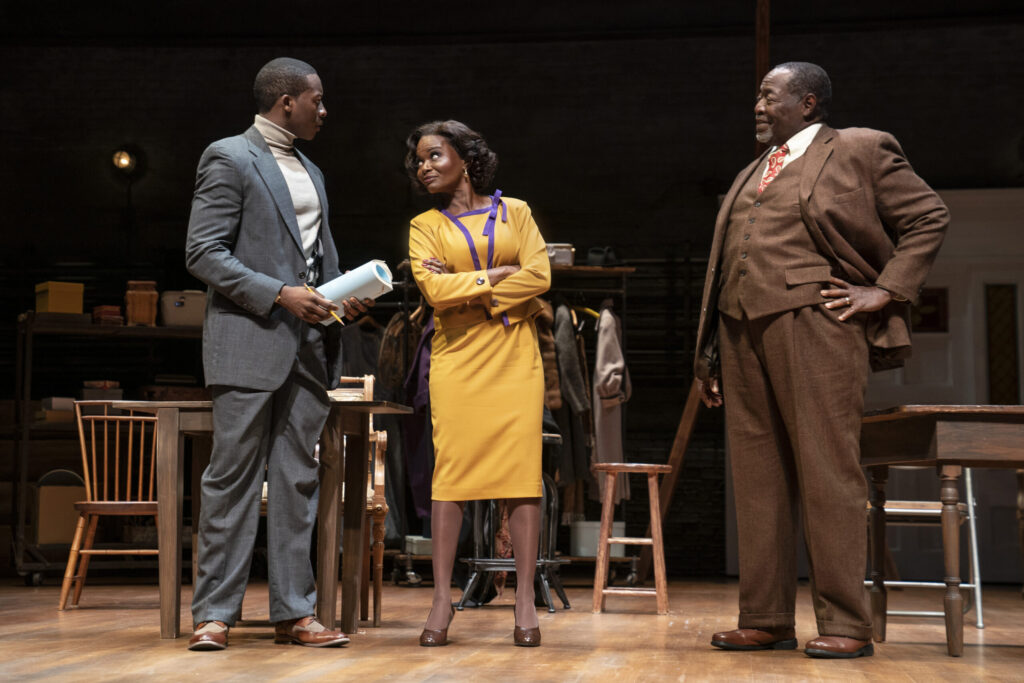
2020s: Seven Black Playwrights Have Plays Open on Broadway
After the COVID-19 pandemic shutdown and racial reckoning of 2020, Broadway saw a major history-making milestone when it reopened its collective doors in the fall of 2021, with seven plays by Black playwrights taking the stage. Between August and December, the following plays made their Broadway debuts: Alice Childress’s Trouble in Mind, Antoinette Nwandu’s Pass Over, Dominique Morisseau’s Skeleton Crew, Douglas Lyons’s Chicken and Biscuits, Keenan Scott II’s Thoughts of a Colored Man, Lynn Nottage’s Clyde’s, and Ruben Santiago-Hudson’s Lackawanna Blues.
These 11 milestones are only the tip of the iceberg of Black Broadway history, and we can’t wait to see all the accomplishments and milestones to come.