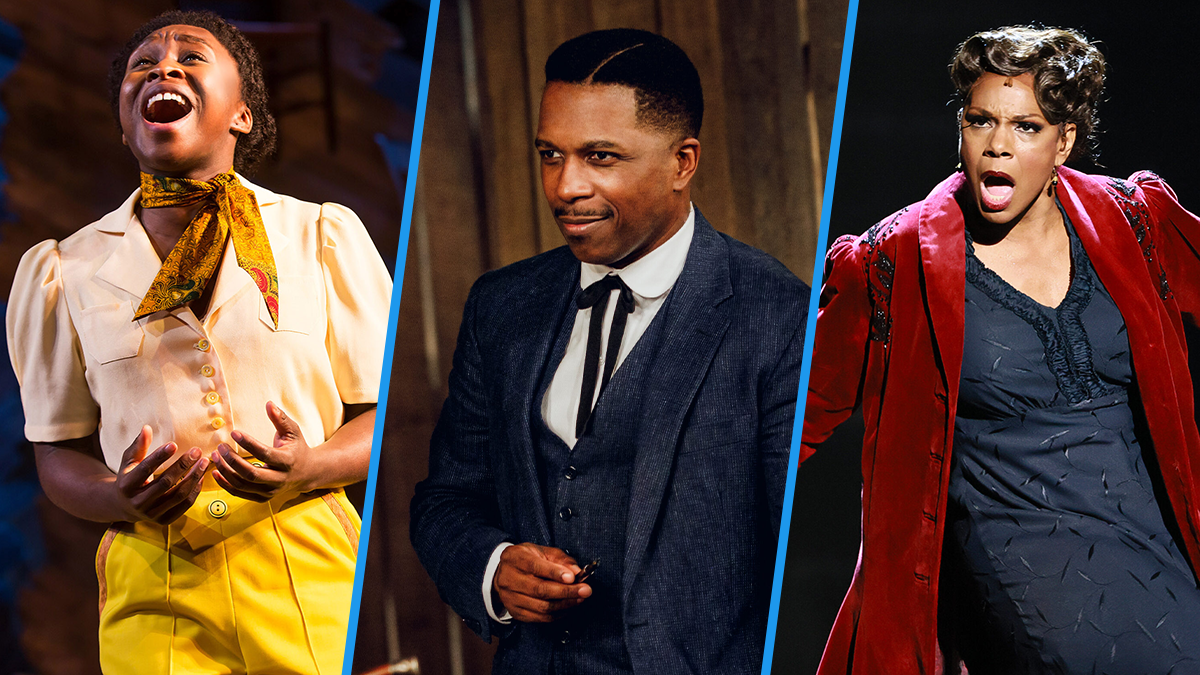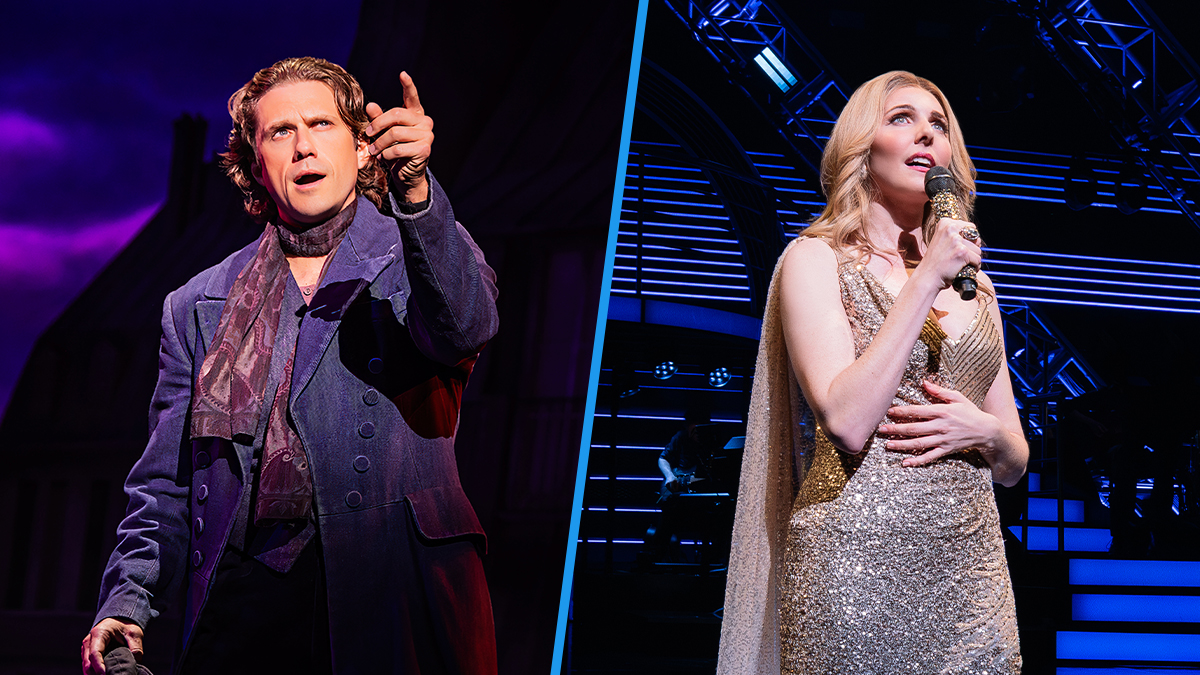
- The history of Moulin Rouge! dates back to 1889, when the famous Parisian cabaret opened in Montmartre, becoming known for its French cancan performances, extravagant entertainment, and influence on popular culture.
- Baz Luhrmann's 2001 film Moulin Rouge!, starring Nicole Kidman and Ewan McGregor, brought the venue's history to the screen through a romantic story featuring popular songs by artists including Elton John, Madonna, and David Bowie.Moulin Rouge!
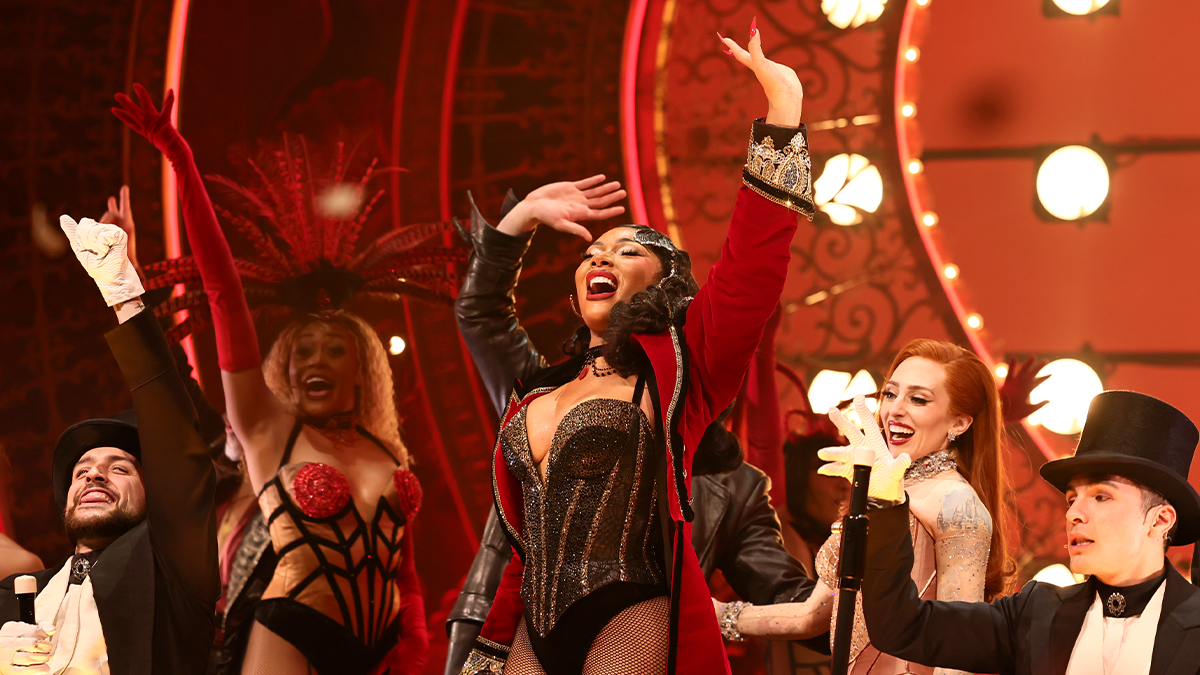
- The Musical opened on Broadway in 2019 at the Al Hirschfeld Theatre, starring Aaron Tveit and Karen Olivo. Directed by Alex Timbers, the stage adaptation went on to win 10 Tony Awards, including Best Musical.
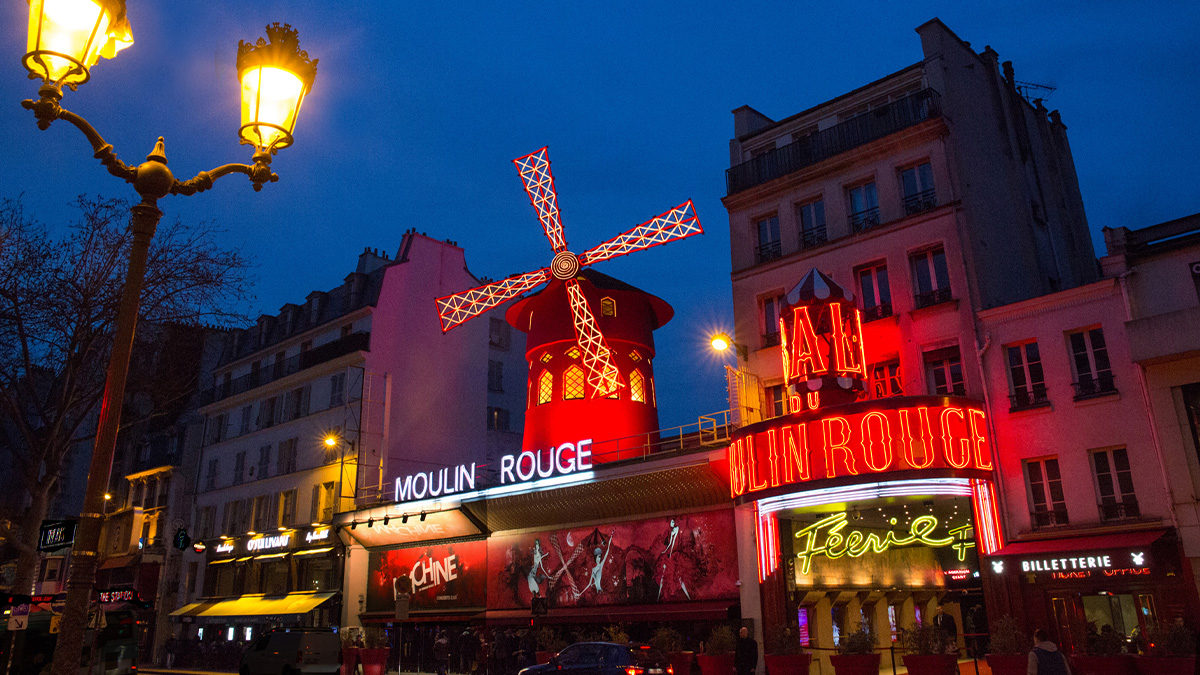
It has been nearly seven years since Moulin Rouge! The Musical opened at the Al Hirschfield Theatre. While that makes the production — which won a whopping 10 Tony Awards, including Best Musical — one of the most successful Broadway musicals of the 21st century, its history dates back much further: to 1889, to be precise.
That’s when the emblematic-cabaret venue — celebrated in the 2001 movie musical that inspired the Broadway hit — first opened its doors in Paris’s bohemian and artistic Montmartre district. Proprietors Joseph Oller and Charles Zidler sought to establish, according to the Moulin Rouge’s official site, “the first women’s palace, the largest, most elegant and most luxurious temple of dance.”
But the Moulin Rouge became more than that, drawing men and women, locals and tourists, the wealthy and the middle class, artists and civilians, with a high-energy dance called the French cancan. The popularity of the cancan and the venue spread, thanks in part to promotional posters crafted by Henri de Toulouse-Lautrec, whose paintings vividly documented Parisian nightlife in the late 19th century.
The Moulin Rouge’s influence would expand in the decades that followed, through a fire and renovations and changes in ownership. After World War I, the glamorous French entertainer Mistinguett, who had begun performing at the club in 1907, served as its artistic director, putting together spectacular shows that would influence those in Las Vegas and drawing American artists and performers to Paris. The 1950s and ’60s brought more international artists, along with the installation of a huge aquarium and an “aquatic ballet” act in a show called Frou Frou, the first in what became a series of shows beginning with the letter F.
This mix of resilience, flamboyance, and innovation drew the attention of Baz Luhrmann, the celebrated Australian director, writer, and producer. Luhrmann had begun his career as an actor, but in the 1990s he emerged as a multimedia auteur, with credits ranging from the acclaimed films Strictly Ballroom and William Shakespeare’s Romeo + Juliet to stagings of the operas A Midsummer Night’s Dream and La Bohème; the latter was later adapted for Broadway.
Luhrmann’s diverse outings have shared a sweeping, unapologetically romantic lyricism. Puccini’s opera in particular, with its account of doomed love among young bohemians in Paris, shaped the plot of the cinematic Moulin Rouge! The film starred Nicole Kidman as Satine, a courtesan and performer at the venue in 1899, and Ewan McGregor as Christian, a writer who falls for her; their love is challenged by a sinister duke and by the consumption that eventually kills Satine.
The movie — which also featured Richard Roxburgh as The Duke of Monroth, Jim Broadbent as Harold Zidler, and John Leguizamo as Toulouse-Lautrec — incorporated a wide range of popular music, including hits by Elton John, Madonna, The Police, U2, Nirvana, and the ’70s soul outfits LaBelle and Harold Melvin & the Blue Notes. There were also original contributions, and nods to Broadway and Hollywood (“Diamonds Are a Girl’s Best Friend”) and Bollywood (“Chamma Chamma,” from the Indian film China Gate).
Luhrmann had Kidman, McGregor, and other cast members perform songs, and he also recruited numerous pop, rock, and R&B stars for the soundtrack — among them Bono, Beck, Pink, Christina Aguilera, Lil’ Kim, Fatboy Slim, and David Bowie, who delivered a reading of “Nature Boy,” the pre-rock standard introduced by Nat King Cole.
That, along with Moulin Rouge!’s success — the film ranked No. 1 at the box office for several weeks and scored eight Academy Award nominations, winning the Oscars for art direction and costume design — set a high bar for any stage adaptation. The book for the stage musical was written by a Tony-winning playwright who also had extensive experience as a screenwriter: John Logan, whose many movie credits include Gladiator, The Aviator, and Hugo — all of which earned him Oscar nods — as well as Tim Burton’s screen version of Sweeney Todd: The Demon Barber of Fleet Street.
To direct Moulin Rouge! The Musical on stage, the producers tapped director Alex Timbers, who had won praise on and Off-Broadway with musicals that blended historical and literary inspiration with imagination and whimsy: Bloody Bloody Andrew Jackson, Peter and the Starcatcher, Here Lies Love, and Joan of Arc: Into the Fire, to name a few. Timbers had also shown his affinity for bringing beloved screen material to the stage, with adaptations of Rocky and The Pee-wee Herman Show; one of Beetlejuice would follow.
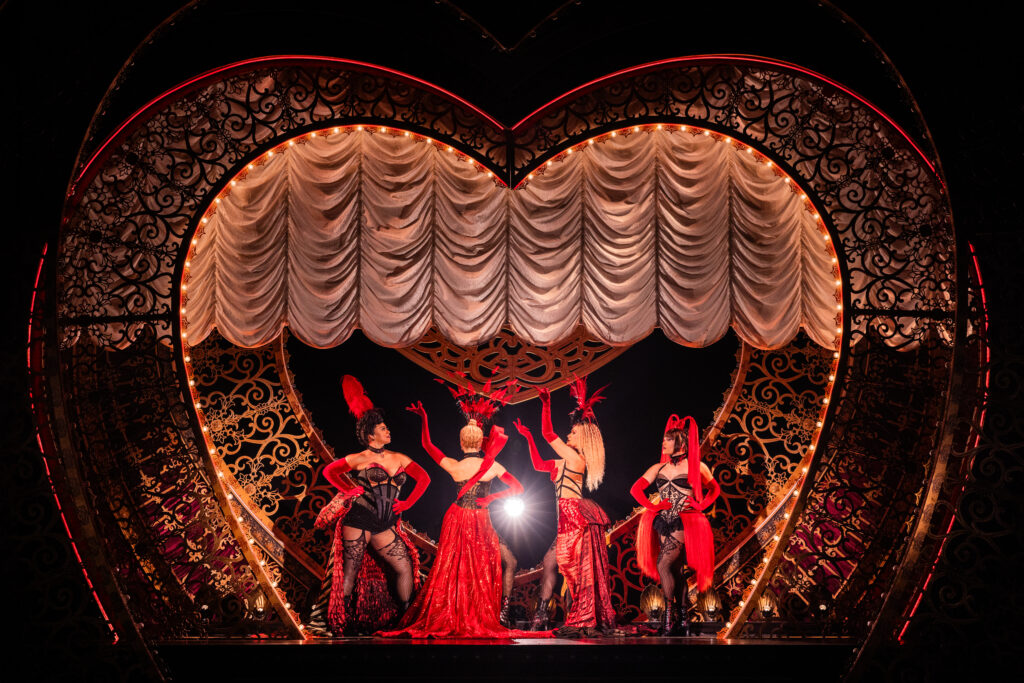
Timbers’s collaborators on the musical came to include the rising choreographer Sonya Tayeh and an all-star design team, including Derek McLane (sets), Catherine Zuber (costumes), Peter Hylenski (sound), and Justin Townsend (lighting) — all of whom would, like the director, receive Tonys for their work on the show. Justin Levine would win another for his orchestrations, for a score that combined tunes that had been featured in the movie with new entries, such as Katy Perry’s “Firework,” Sia’s “Chandelier,” and Walk the Moon’s “Shut Up and Dance.”
Logan’s libretto, meanwhile, injected fresh nuances into key characters. Satine emerged as a more autonomous, independent-minded figure, while Zidler became a flamboyant showman as well as a savvy businessman. The latter role finally earned the long-beloved Danny Burstein, who had previously collected six Tony nominations, that prize; Aaron Tveit earned another for his performance as Christian.
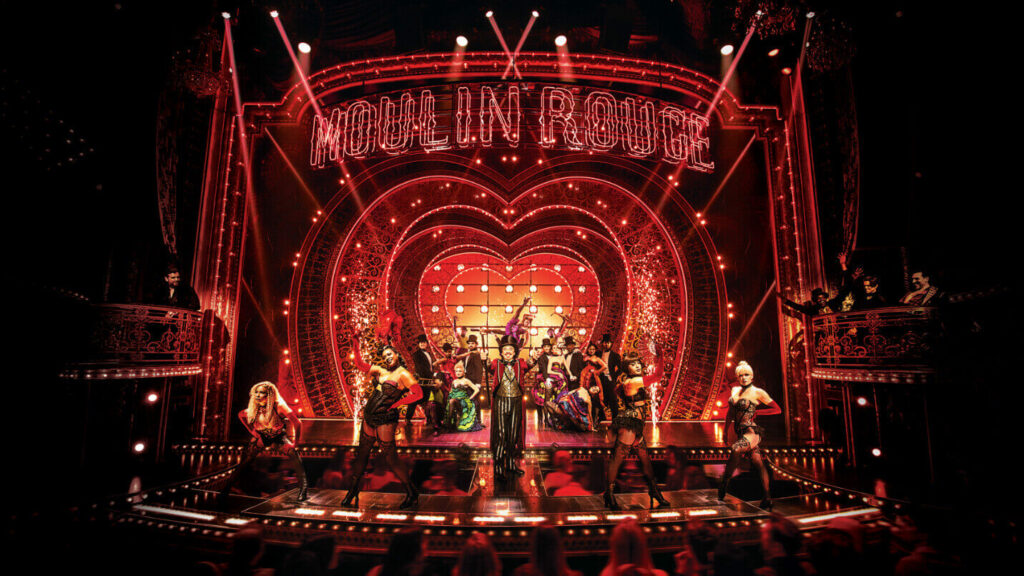
In the years since, Moulin Rouge! The Musical has continued to attract both rising performers and a diverse assortment of showbiz veterans. The role of Zidler, currently occupied by Bob the Drag Queen, has also been played by Boy George, Wayne Brady, and Tituss Burgess, and actresses who have stepped into Satine’s heels include beloved music artist Joanna “JoJo” Levesque, Natalie Mendoza, and Solea Pfeiffer.
So as the original Moulin Rouge, which celebrates its 137th anniversary this fall, continues to lure artists and fans from around the world, the spectacular stage musical that bears its name — which has been produced in London and Australia, and recently launched an international tour — does the same.
Moulin Rouge® is a registered trademark of Moulin Rouge.