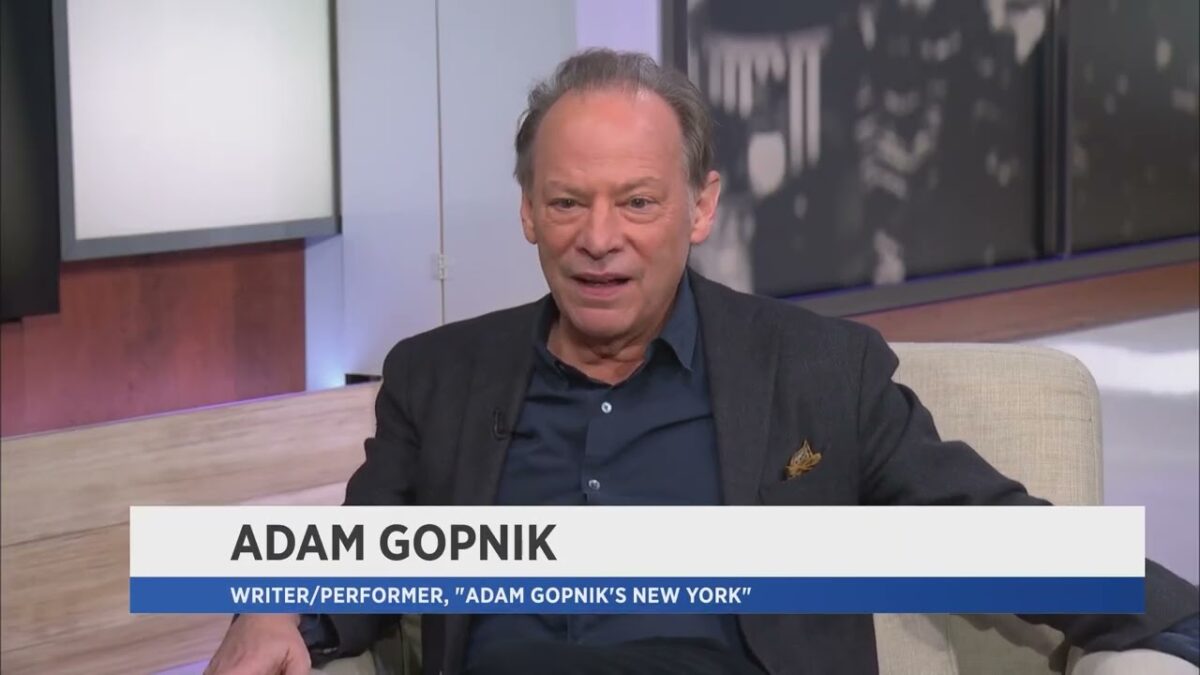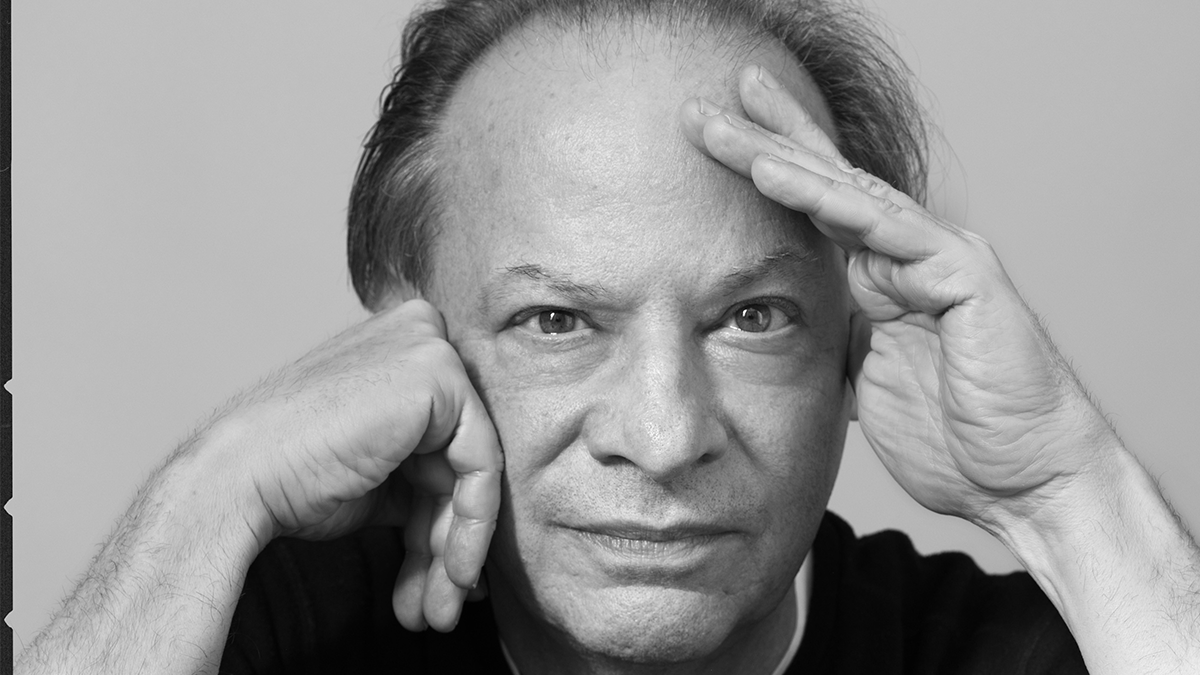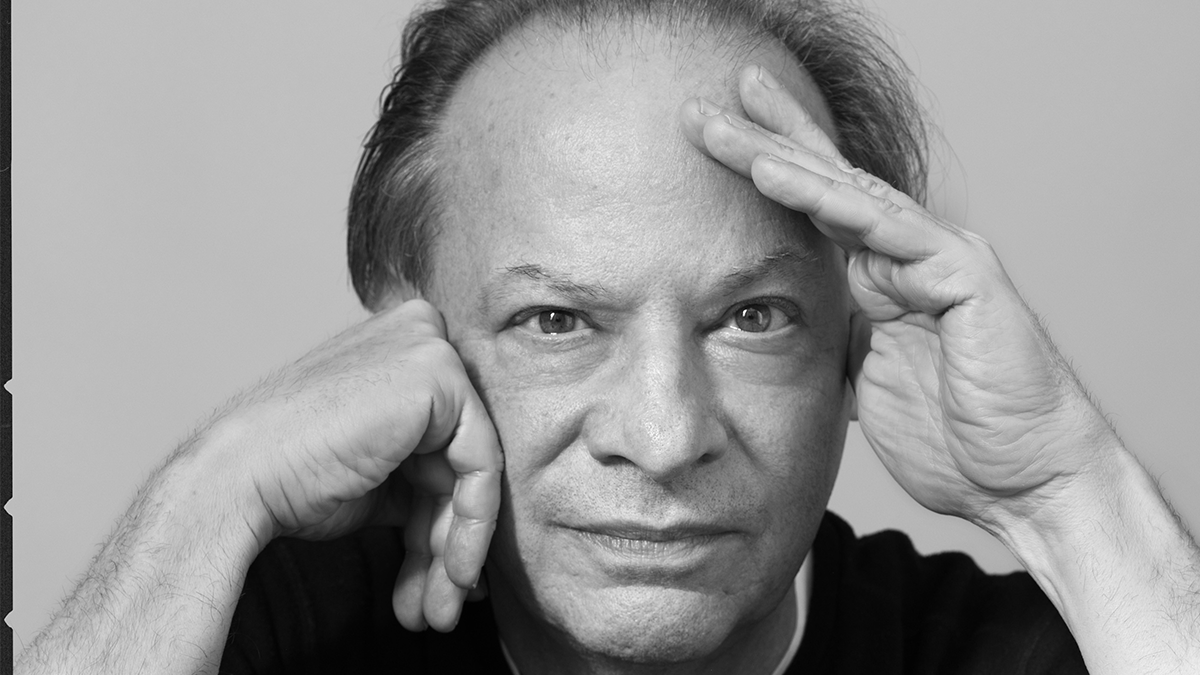
It would be hard to think of anyone better equipped to craft an homage to New York in all its eclectic splendor than Adam Gopnik. A best-selling author and award-winning journalist who has written for The New Yorker since 1986, Gopnik is a consummate polymath: His essays, reviews, profiles, and stories have covered subjects ranging from fine art and food to sports and travel — and that’s to say nothing of his celebrated children’s novels, or the various theater pieces, many involving music, that have found him collaborating with luminaries such as David Shire, Nico Muhly, and Melissa Errico.
Gopnik, who is also an accomplished lecturer and a natural raconteur, channeled these gifts into a live performance piece, Adam Gopnik’s New York, that enjoyed a sold-out run last spring. Now, anyone who missed it (or wants to see it again) can catch the autobiographical solo show at the Clark Studio Theater at Lincoln Center, where it will play October 17 to October 26.
The piece sprung from a conversation with Steve Martin, a New Yorker contributor who is coproducing New York with Tony Award-winning Broadway producer and President of the Nederlander Organization, James L. Nederlander. “Steve said, ‘You really ought to do a one-man show.’” Gopnik noted that he essentially had, by participating in storytelling events for the arts organization The Moth. “Steve said, ‘No, you’re not a stand-up comic.’ He said, ‘You have an interesting breadth of mind; I love to hear you land on one subject and then leap to another, and people would enjoy that.’ I said, ‘They would? Nobody in my family does.’”
But Martin pressed on: “He said, ‘Set your mind free. Don’t try to make it a comedy of domestic manners; what’s interesting in your work is that you go everywhere.’” So Gopnik and his wife, Martha, headed to the Midtown restaurant Café Un Deux Trois, where crayons are provided, usually for younger patrons, and they used paper napkins to “write out every riff I had ever written or tried at the dinner table that seemed funny or original. We had about 40, finally, and I just tried them out in the living room of our apartment, with my amazingly tolerant children and a handful of amazingly tolerant friends, until a structure began to take shape.”
Martin helped develop that structure, as did the acclaimed actor Raúl Esparza, whom Gopnik says “was hugely helpful in showing me how to give the show shape. It’s a simple architecture, just me and a chair,” though that chair represents a succession of objects — including a couch in a psychiatrist’s office. “You do 10 years in New York,” quips Gopnik, who grew up in Canada, “and then you see a shrink to make sense of what happened to you.”
Gopnik “ended up in the office of the oldest and one of the most distinguished, Sid Caesar–like psychoanalysts here,” he continues, “and I went through five years of analysis in which every rule of good psychotherapy was broken. He talked unstintingly about previous clients — he had treated everybody in New York … He gave advice. He even ended up making reservations for us at a hotel in Venice because he didn’t trust me to choose the right one. It was completely unorthodox and in some ways exasperating, but it ended up with my feeling, if not cured, then healed. So the spine of [New York] is this bizarre transference with an unlikely authority figure who ends up being a source of real wisdom.”
The show begins with Gopnik’s first memory of the city. “It’s indecently clear,” he says, “but I have the photographs to back it up. My parents, who were penniless graduate students at Penn, were so enamored of art, and modern art in particular, that they drove my older sister and me to be there for the opening of the Guggenheim Museum of Art. It was 1959; I was 3 years old, and my mom made a special mustard-colored velvet suit for me and a matching dress for my sister just so that we could stand there on the opening day.”
From there, Gopnik segues to a broad range of topics. “I talk about the history of snowflakes; I talk about Marcel Proust’s sexual obsession with rats; I talk about meeting the great philosopher Karl Popper; I talk about the making of Central Park.” The park in particular provides Gopnik, who has written widely and with great sagacity about social and political issues, a forum for some of those insights.
“I didn’t want to make the show overtly political,” Gopnik stresses, but he notes that Central Park’s landscape architect, Frederick Law Olmsted, “was actually a writer … and he had a vision of it as a park for people who are fundamentally different — where people of all kinds and races and beliefs could come together and learn to coexist outside of politics, to learn the practice of pluralism as a source of pleasure, which then we extend through experience and familiarity into the practice of politics. I end that section saying, ‘If I have a politics, it’s Central Park.’ That’s the one way I try to give the show a political dimension, without giving it a partisan ideology. Central Park is a microcosm of everything we love about New York City.”
For those less familiar with the city, or with Gopnik’s work, he says of the show, “I hope it will make them laugh. I think the show is funny — not stand-up-style funny, but it’s the classic story of a man from the provinces: I came from Canada on a bus marked ‘New York City’ with no work, no home, and my then-girlfriend, now my wife of many years. In that sense it’s a universal story, of a kid who comes to the city and tries to make a life there, so I hope some part of that speaks to people.”
Gopnik adds, “I also hope that it’s a joyous show. I write to delight — that’s my first impulse, even when I’m writing about subjects as dark as mass incarceration or gun control. I want the reader to say, ‘That was time well spent,’ and that’s what I want for the audience.”