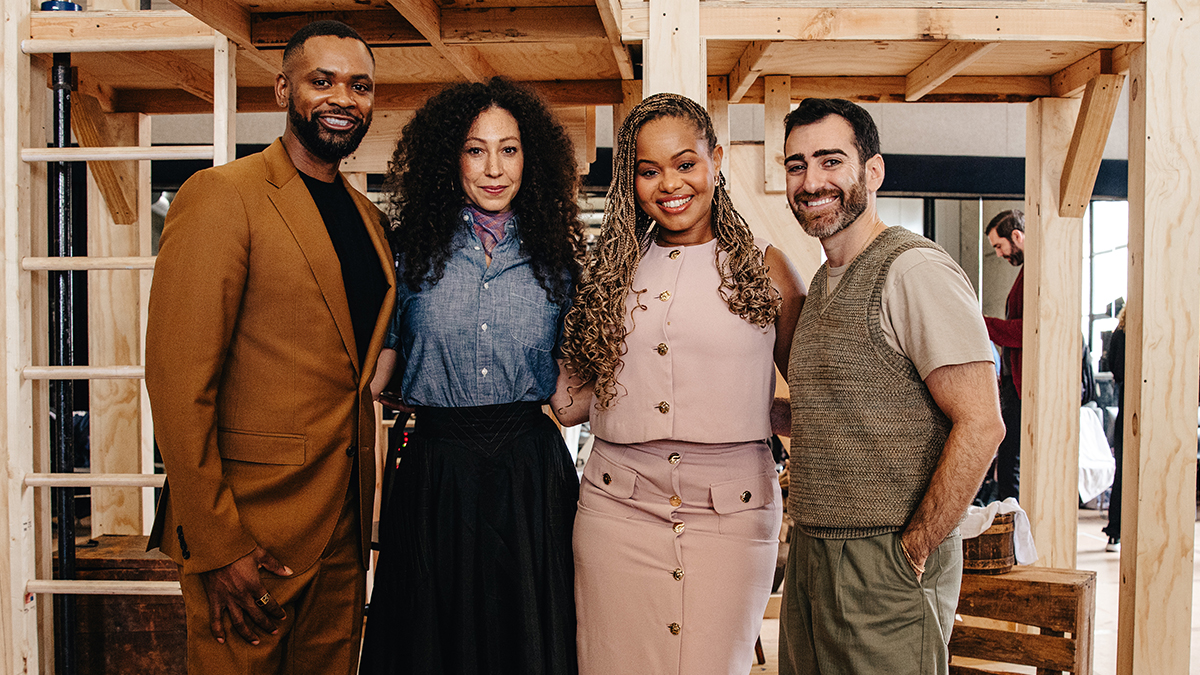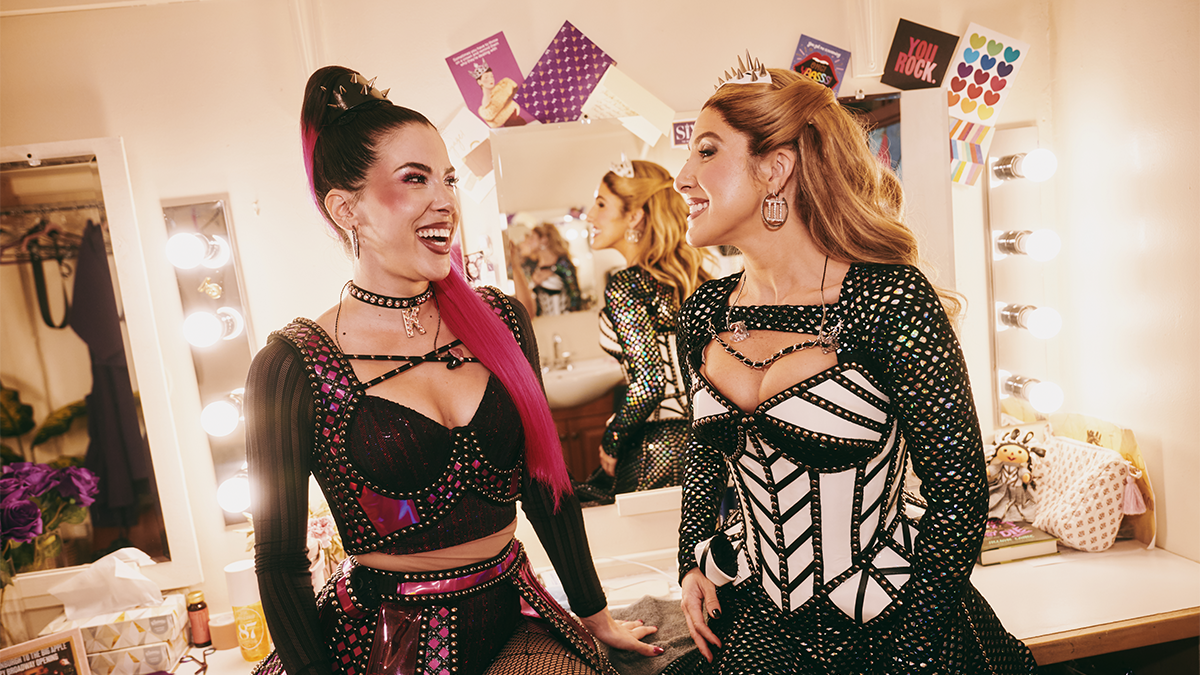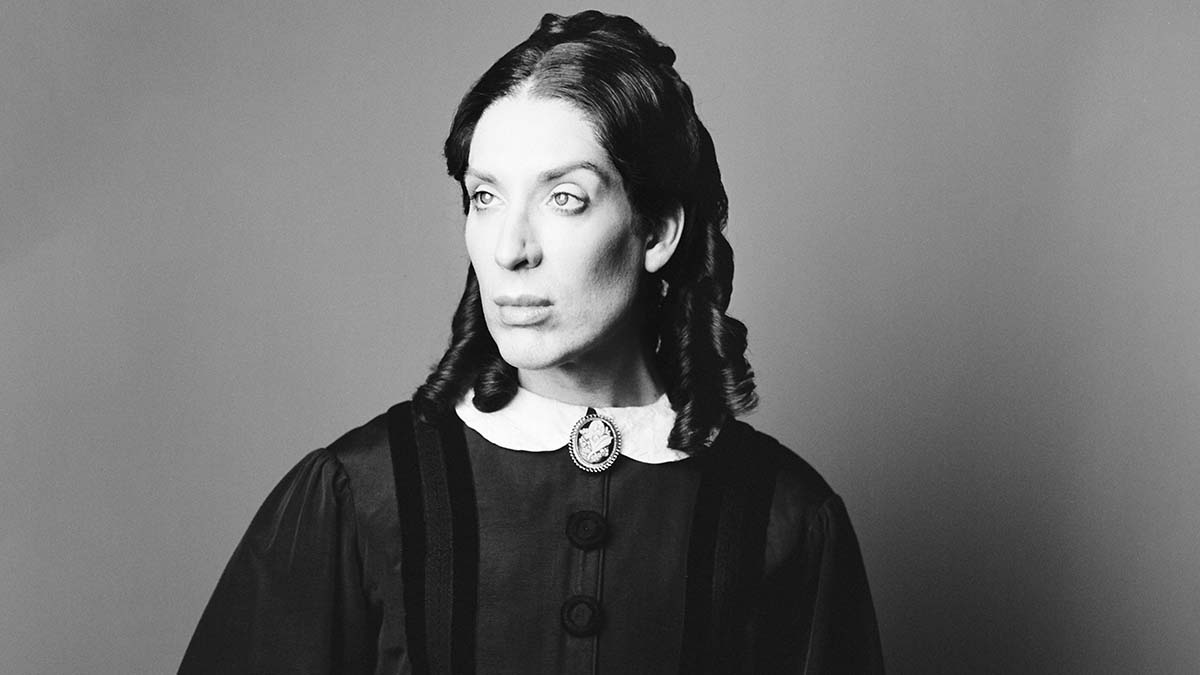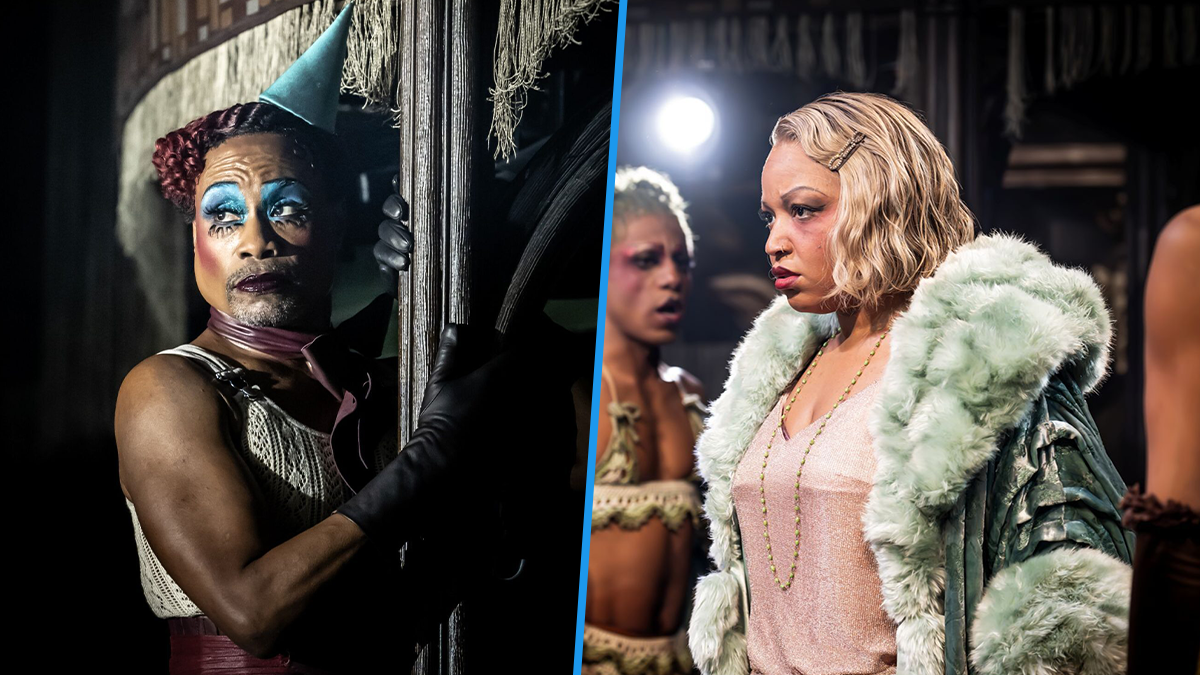
Tony winner Billy Porter and two-time Olivier nominee Marisha Wallace are the latest stars to take center stage at Broadway’s hottest — and seediest — haunt: the Kit Kat Club. The acclaimed performers are playing The Emcee and Sally Bowles in the 2024 Broadway revival of Cabaret and will be the final pair to take on the iconic roles before the production closes October 19. Entertainment journalist Frank DiLella of Spectrum News NY1 caught up with Porter and Wallace ahead of their Broadway bows to discuss making history with the Kander and Ebb classic — and why Cabaret feels more urgent now than ever.
Billy Porter, welcome back to Broadway. This is your first time back since 2016.
BILLY PORTER: I’ve been a lot of places and seen a lot of things. [Laughs.] No — but really, it’s coming home. I’m excited to be back in the theatre where I did Smokey Joe’s Café, when it was the Virginia Theatre. And to be experiencing this show with Marisha Wallace. This is her first big Broadway lead. I look into her eyes and see her joy and feel her joy. I’m getting to experience Broadway for the first time through her.
Marisha, you’re back on Broadway, and this time you’re above the title. This is a major moment for you!
MARISHA WALLACE: You came and did a feature on me for NY1 in London when I was doing Guys and Dolls, and at that time I just thought London is where I’m going to be as an actress. And when this moment came up, I just thought, “I’m so excited to show Broadway the artist I’ve become in London.” That’s the energy I’m taking with me back to Broadway. And this moment is historic: I’m the first full-time Black Sally Bowles! And Billy is the first full-time Black Emcee. And our Cliff is Black, so it’s historic and iconic too.
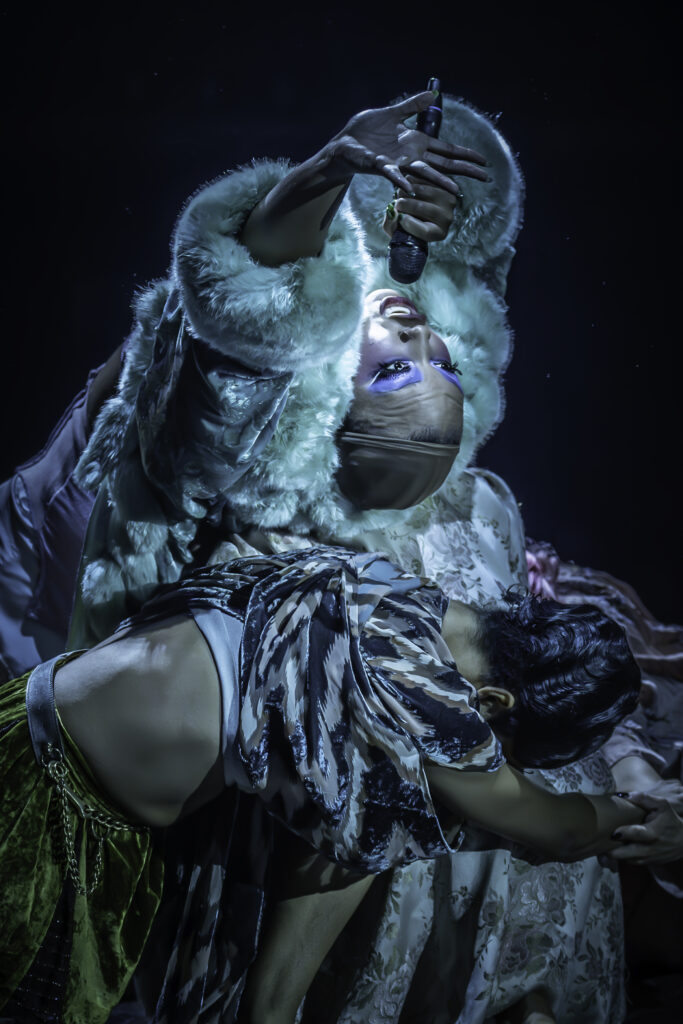
Having the 3 principals portrayed by Black artists adds an entirely new layer to this already powerful story.
MW: When I first wanted to do Cabaret, I started asking questions like, Why hasn’t there been a Black Sally Bowles or a Black Emcee? And someone once said, “I don’t think there were a lot of Black people around at that time.” And I was like, “What?!” It was the 1930s, not the 1800s! Black people have always been everywhere! So, once I started doing the research, there were over 24,000 Africans living in Berlin at the time and lots of Black artists were moving to Europe to escape the Jim Crow South. And I thought, “That’s our way into the story.” We are these cabaret artists who showed up to do these shows and then we find a new kind of racism that we never experienced before — which was Hitler. Black people died in the concentration camps. That’s a story that’s never been told.
BP: It feels necessary and current [to be the first full-time Black Emcee]. This show is about what happens when we let authoritarianism take over. And my art is my passion and it’s my calling and purpose and ministry and resistance. And to be able to do this show right now in the times we’re in, to tell this story, it’s humbling and everything I’ve ever wanted to do.
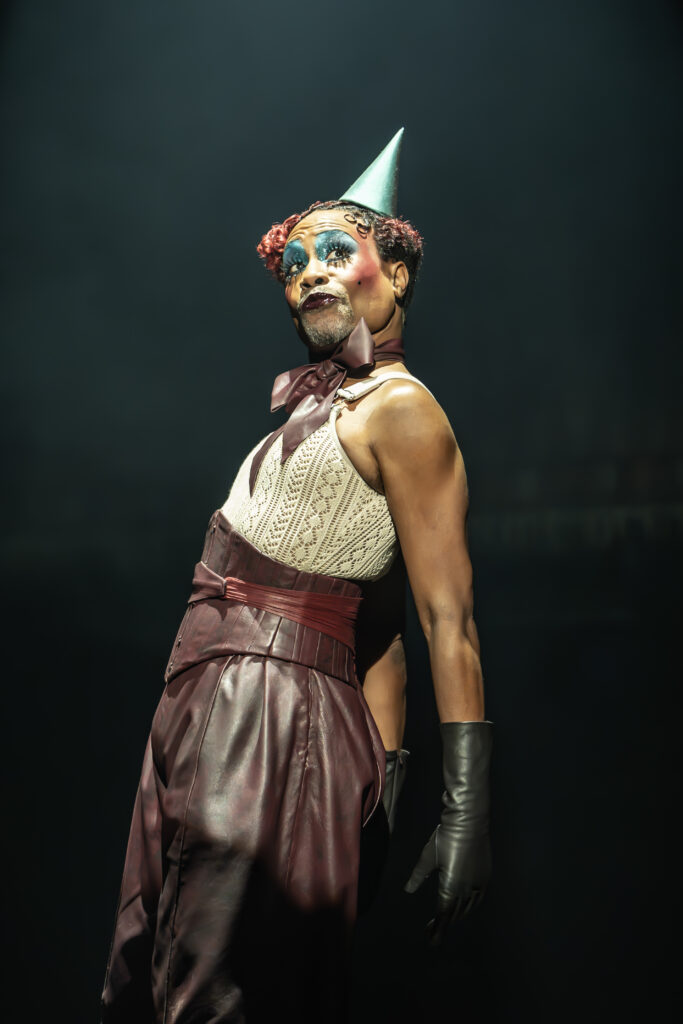
Billy, I feel like the Emcee is a role you were born to play. Was this a dream role?
BP: Yes. I asked to audition for the revival in the ’90s and they told me no. They said, “That’s not the story we’re telling.” So, I did some research, and I found a book called Destined to Witness: Growing Up Black in Nazi Germany, and I sent it to the entire creative team, signed “We were there — we’re always there.” Now all these years later I get to play this part. My mother used to say, “God’s delay is not denial.” It’s very special right now that I’m doing this.
Joel Grey put his stamp on The Emcee, as did Alan Cumming, Eddie Redmayne, and so many others. Billy, what are you pulling from to craft your Emcee?
BP: For my character, he flees the Jim Crow South to go to Europe thinking he’s going to be safe, only to find there’s no safety there or anywhere. That’s my journey.
Marisha, I love watching you as an artist. You’ve gotten to put your stamp on and reinvent some classic musical theater roles. I’m thinking Adelaide in Guys and Dolls, Ado Annie in Oklahoma!, now Sally Bowles in Cabaret.
MW: I think when you revive something, you should bring something new to the story or tell it in a way that’s going to relate to the climate you’re in today. And I just feel like, with all these roles, we get so caught up in the stereotype of how a role should be played and what they should look and sound like. But with a revival, this is a time for us to revive it and make the story fresh and new but without changing a word of the text — just changing a bit of the intentions and the historical background of each character. What I learned from working with [director and producer] Nick Hytner during Guys and Dolls, he talked about how with Shakespeare, they change things all the time. Shakespeare shows can be set in different places and in different time periods and no one bats an eye. So why can’t we do that with musical theater?
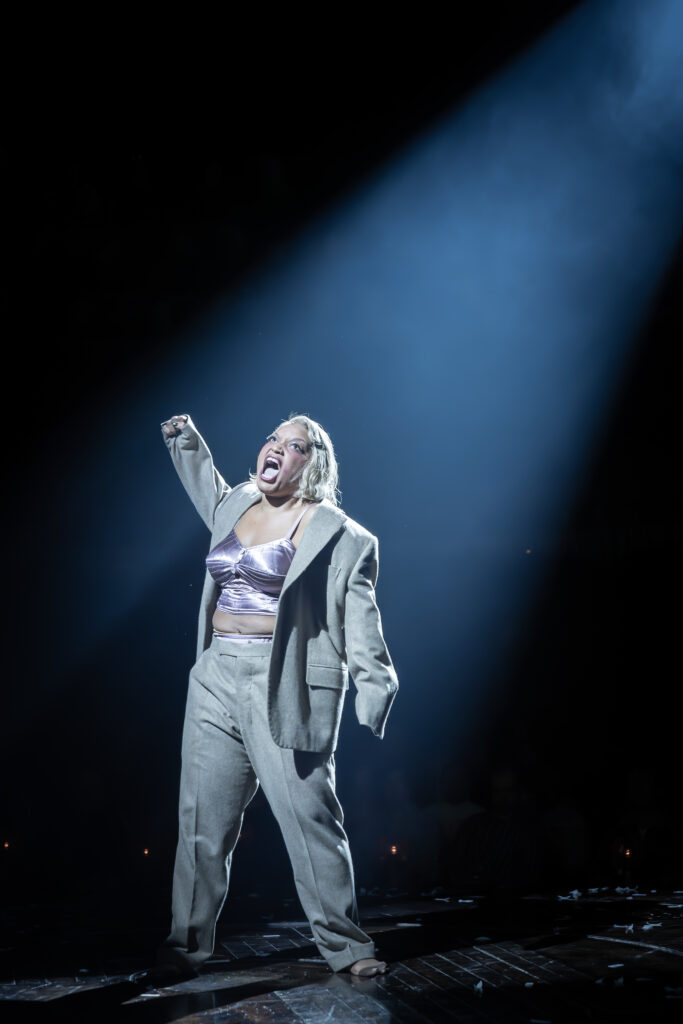
You’re a musical theater superstar in London. How does that feel? Has it changed you as an artist? You’ve spoken about the “Broadway butterfly effect”: that feeling of being pigeonholed and needing to step away from Broadway in order to return on your own terms. Can you talk about that journey?
MW: When I left New York, it was 2016. It was a different time. The archetype of what a Black woman was allowed to do and was doing was very limited. And I played all those characters: Motormouth Maybelle from Hairspray, Effie in Dreamgirls, Matron Mama Morton in Chicago, the sassy Black girl Becky from Waitress. That was all that was available to me to play. So, when I got to the West End, it was different. I don’t know if it was because they didn’t have segregation or they’re just a little more open. I also think it’s because their theater is so subsidized — they’re not bound to commercial restraints of not being able to take a risk. London was an opportunity for me to spread my wings. And they just let me.
Billy, you made your West End debut with this production.
BP: Making my West End debut was magical. I spent the first part of my career not being able to play human beings. I’m so grateful that I’m getting to do something that’s so important right now. It was a magical experience. I love London.
Marisha, what’s it been like sharing the stage with Billy Porter?
MW: I’ve known Billy since I got to the city in 2012. And he was at my house eating a hot dog because my friend brought him to a cookout at my house. [Laughs.] That’s how we met. And from then on, we became friends. He would come visit me in London and we would hang out when he was there shooting films. In 2023, I saw him, and he was trying to figure out what to do next, and I said, “We would make an amazing show together.” And when I got Cabaret, they said, “We need an Emcee who can match you.” And I thought, “I got the perfect person!” And he said, “I’ll do it, but I’ll only do it with you!”
Billy, there’s an immersive element to this production. Is that fun for you as a performer?
BP: It’s right in my wheelhouse. I’ve been a live solo performer alongside my more traditional training. So one of my favorite things to do is concertize, and that skillset is very much available to me. I enjoy it. I enjoy it when the audiences aren’t behaving and it’s built in where I can come out if I have to and snatch up a phone. [Laughs.]
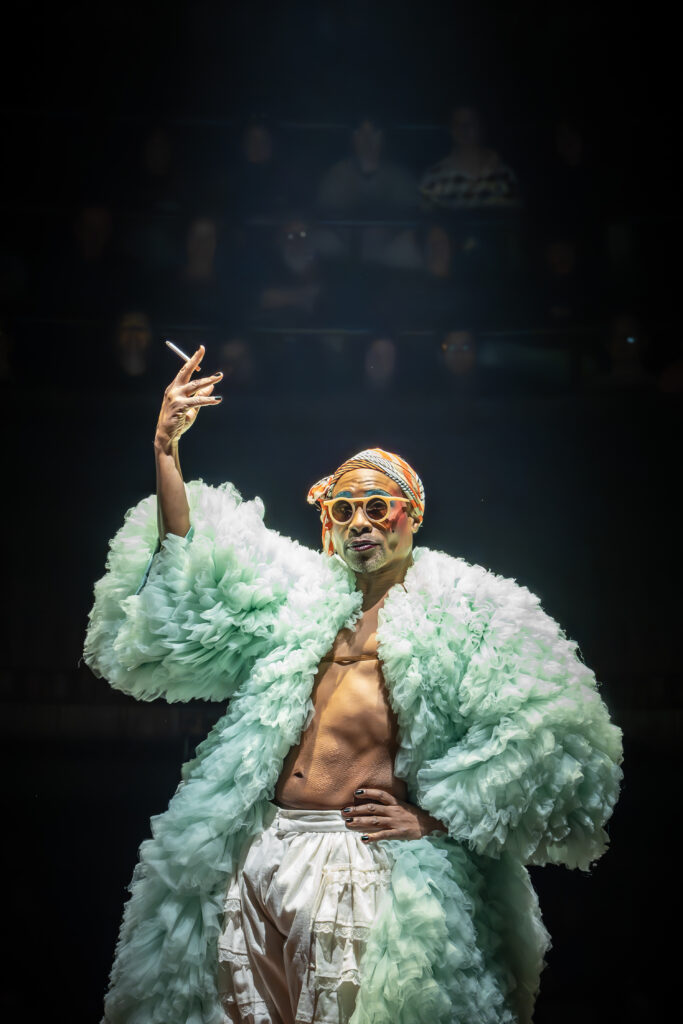
Did that happen a lot in London?
BP: No. But there were a couple of times I had to snatch some edges. [Laughs.]
Sally Bowles goes on quite the emotional ride in Cabaret, and in this production especially. What you’re doing on stage is incredibly intense. How do you prepare for that each night?
MW: I take her off and put her on. As soon as I finish the last scene, I start taking her off. I always want to jump off the cliff every night, but I always save something for myself because Sally can’t have everything. And sometimes I want to give her everything because this role has driven a lot of people crazy. It connects you to parts of yourself that you keep hidden from everyone, and there you are in the middle of the stage, completely vulnerable and cracking open those wounds every night. But Sally has helped me; doing this has been 10 years of therapy because I just cry every night with what’s going on in the world and in my life.
Marisha, the 2023 London revival of Guys and Dolls was spectacular! How do we get you and that show to New York?
MW: This is all part of my master plan. Let me come back to New York and knock Sally out of the park, and then producers will be like, “Yes! Let’s greenlight the Guys and Dolls revival!” [Laughs.] There was talk about it, but it’s all about finding the right venue for it. There was talk about doing it in an office building or on a pontoon. Our director, Nick Hytner, told me, “It’s not coming — but it’s not not coming.” [Laughs.]
Billy, it was recently announced you’re going to be playing Albin in a new all-Black production of La Cage aux Folles at City Center next year. We talked about this a while back and now it’s finally happening! Give us a tease.
BP: I can’t tell you much — but [director] Robert O’Hara and I are building something that we hope will be a classic. It’s going to be special.
You can catch Billy Porter and Marisha Wallace in Cabaret at the Kit Kat Club through October 19 in the August Wilson Theatre.