On October 30, 2003, Broadway was introduced to a new musical called Wicked, putting a fresh spin on the witches audiences knew and loved from The Wizard of Oz. Twenty-two years later, the musical continues to enchant audiences worldwide to an even greater fervor as they await the second half of the Wicked film adaptation.
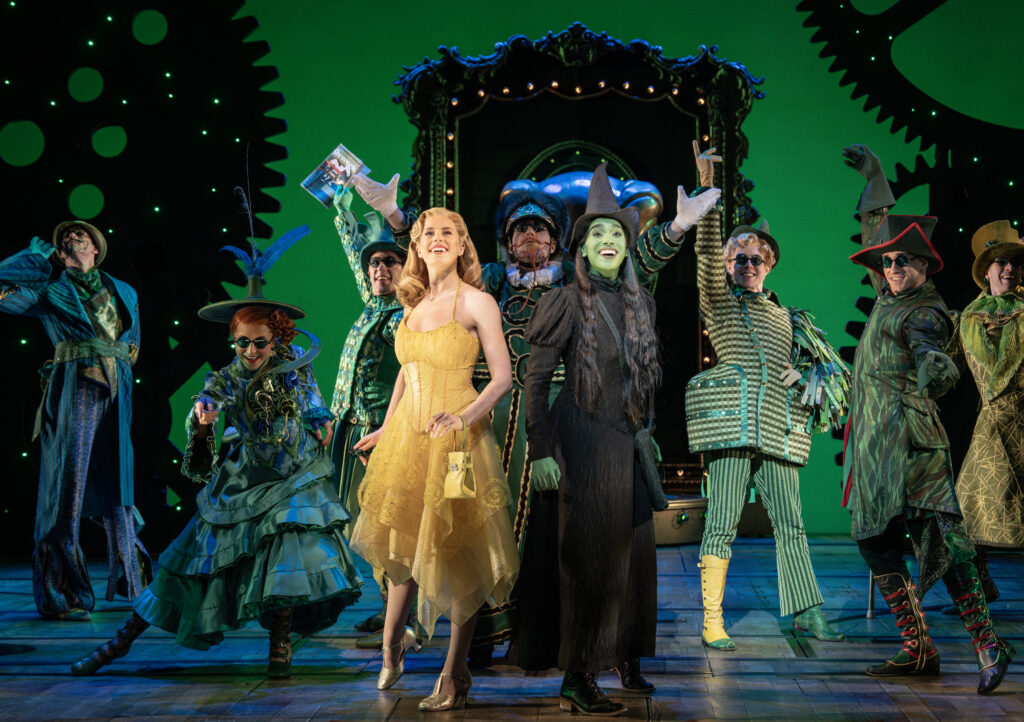
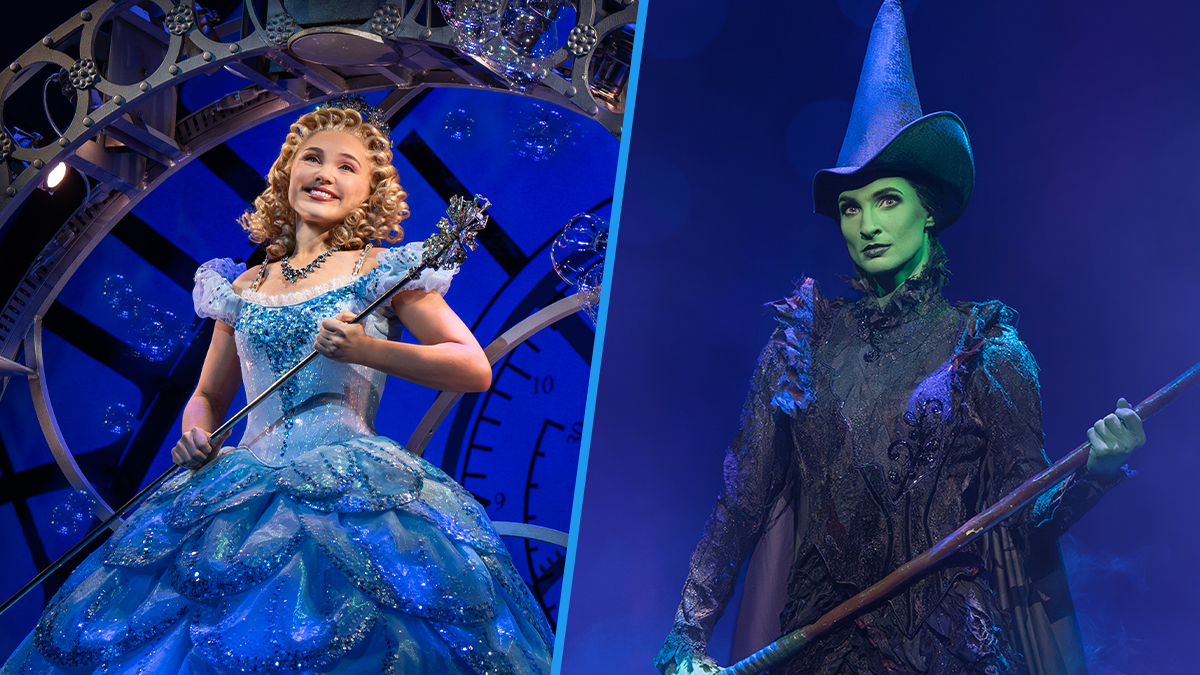
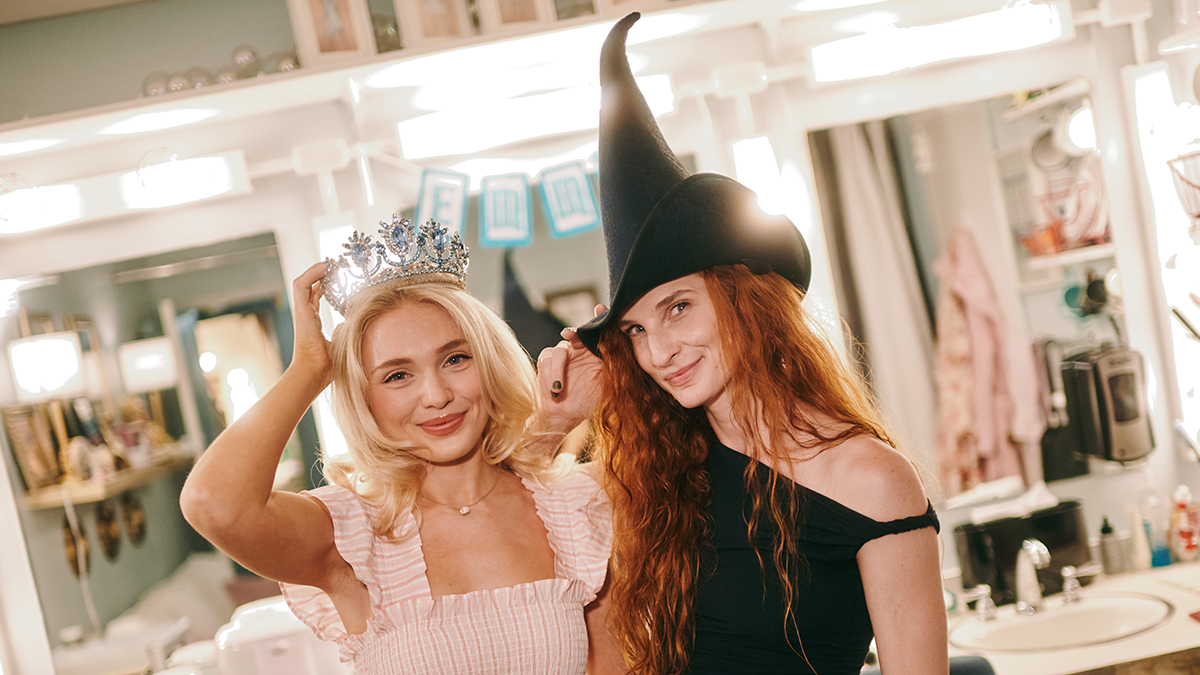
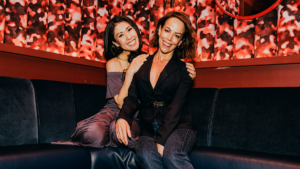
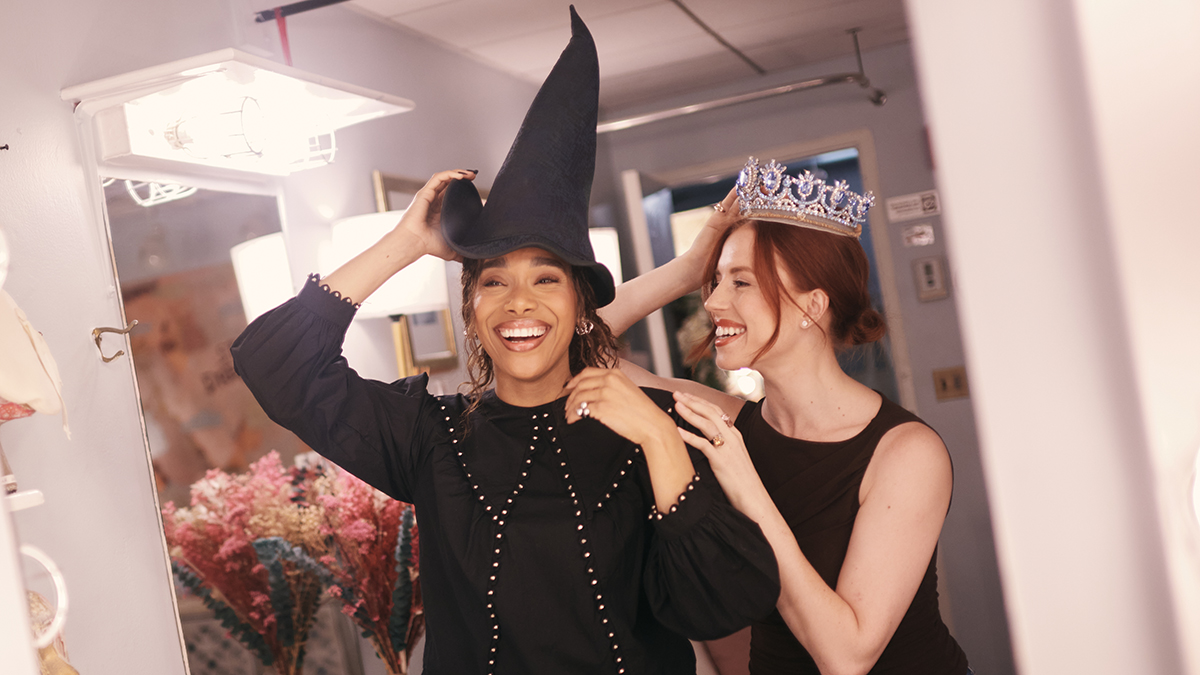
Leading the long-running musical at the Gershwin Theatre in another exciting year are Lencia Kebede as Elphaba and Allie Trimm as Glinda. Broadway Direct caught up with the duo ahead of the musical’s anniversary to chat about their introduction to Wicked, their shared California roots, and what they’re most looking forward to seeing in Wicked: For Good.
You joined the show at the beginning of March. Do you feel fully settled into the land of Oz now?
Allie Trimm: Oh yeah, I definitely think so. Because we’re over halfway through with our year here, I feel like it’s both flying by and I also feel like it’s been a whole lifetime of settling in and finding our rhythm with the show.
What was your first experience with Wicked? Who were your first Elphabas and Glindas?
Lencia Kebede: The gag is … I don’t know! But it was in 2008. I was in middle school, I was 11 or 12, and I just remember sitting up on the mezzanine right above where we are right now.
AT: Oh, you saw it here [at the Gershwin Theatre]?
LK: I saw it here, in New York! I’m from L.A., California, so I came out for a trip with school, and I just remember being like, “Huh! This is crazy.” And then I started listening to the album like it was a Beyoncé album. I was obsessed.
AT: I love that, because some of my favorite performances to do are for the school field trips, because you really get rowdy responses from the kids!
LK: Well, that was me, girl!
AT: I feel like that is so cool that you got to see it with a school field trip. I saw it when I was 11. It was on tour. So I saw Kendra Kassebaum and Stephanie J. Block. They were my role models. I still draw inspiration from both of them.
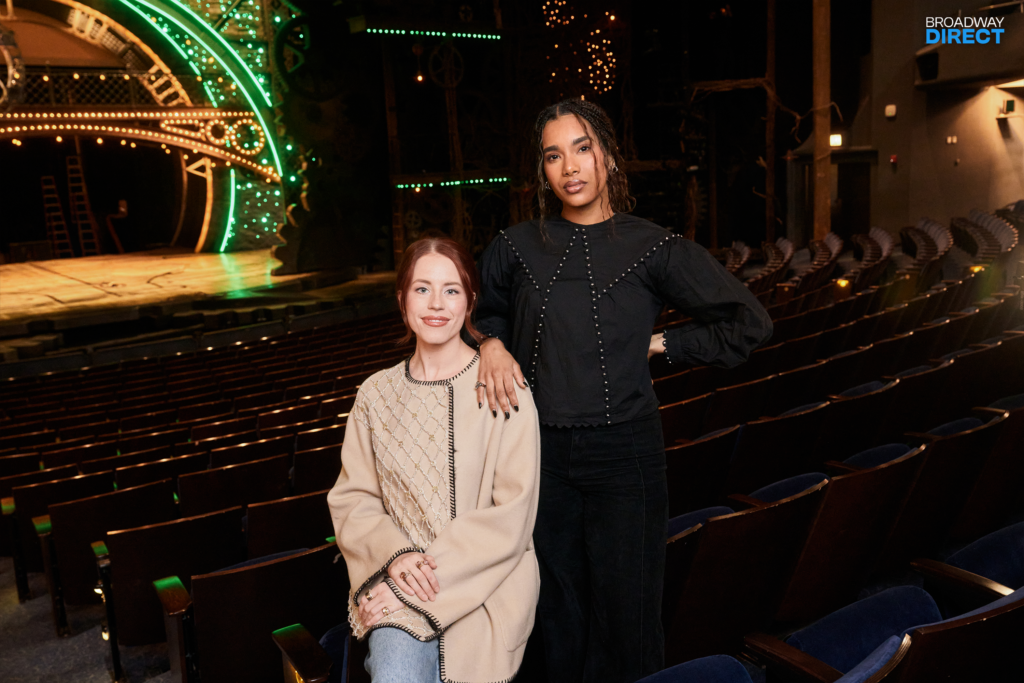
And Allie, you’ve been with the show since 2021, and after a break, you’re now back, starring as Glinda. When did you find out you were going to take over the role full-time, and how did you react?
AT: I found out I was, well, I was waiting in line to cast my vote for the presidential election. I had auditioned for the role so many times and performed the role as the standby so many times, I kind of thought that maybe my time with the show [had] ended, and I was making peace with that. So to get this next chapter was just a huge gift.
Lencia, this is your Broadway debut! You joined the show fresh off playing Angelica in Hamilton on tour. Could you share a bit about being able to put your touch on two of the century’s most iconic musicals?
LK: Oh, man … it’s really special. It’s special because so many people relate to these characters in so many ways for such a long time, so getting to come in and bring myself to it, it’s empowering to me and to my community. It just makes me feel like the sky’s the limit. No pun intended! Help!
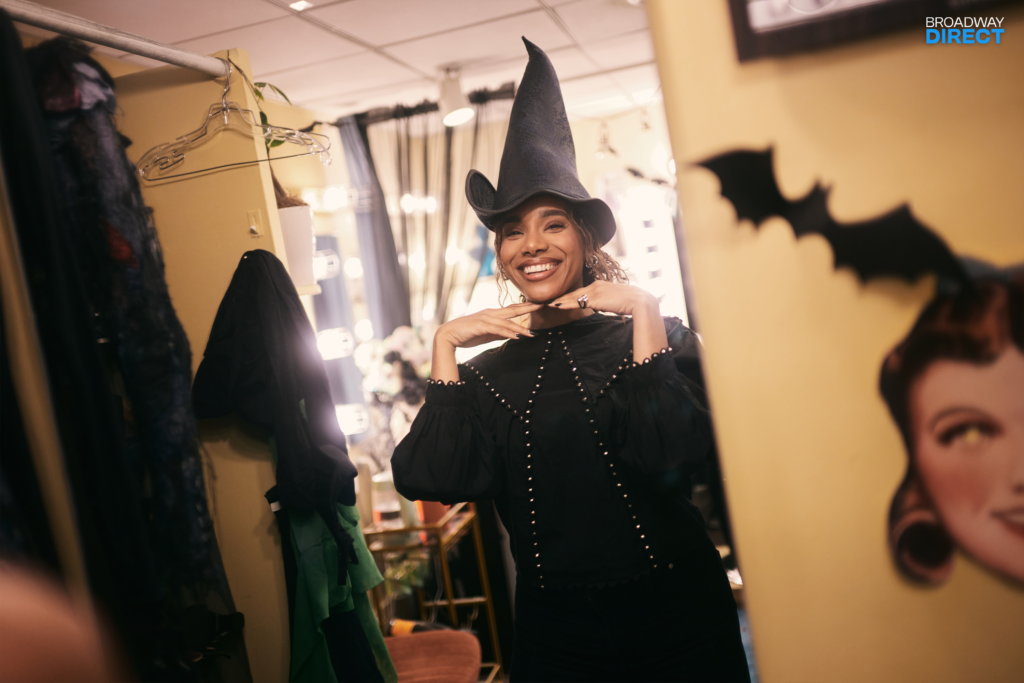
And you’re also the first Black actress to play Elphaba full-time on Broadway. Did you anticipate the outpouring of excitement and support when your casting was announced?
LK: I had no idea what it was gonna be like. I was like, “Am I gonna be flooded with just attention, or is it just gonna be like, ‘OK, cool!’” But yeah, it certainly exceeded my expectations. It’s felt so unique to have this platform to share about my community. My family is from Ethiopia, and getting to talk about my heritage through the eyes of Elphaba, it’s all just beyond my wildest dreams, honestly.
Elphaba and Glinda are so closely tied throughout the show. What’s been your favorite part of working opposite each other?
LK: I think we’re really good problem solvers. I think this show is a beast, and it has a lot of marks that have to be hit, and some of them are really difficult. And I think we are particularly skilled in communication. It seems so fundamental, but it’s essential for teamwork. It’s not like we always agree on everything all the time, but we figure out how to overcome those difficulties in a show this big and put out the best possible show.
AT: We’re also coming to the show with such different experiences with the show. I feel like having watched so many Glindas and Elphabas in my time as a standby, I got such a clear vision of what Wicked is and how the machine operates. Because to come into a long-running show, you have this balance between putting your own touch on it, which I think we both do, while also maintaining the integrity of something that has worked for 22 years. So I feel like finding that rhythm together has been a really rewarding part of the process.
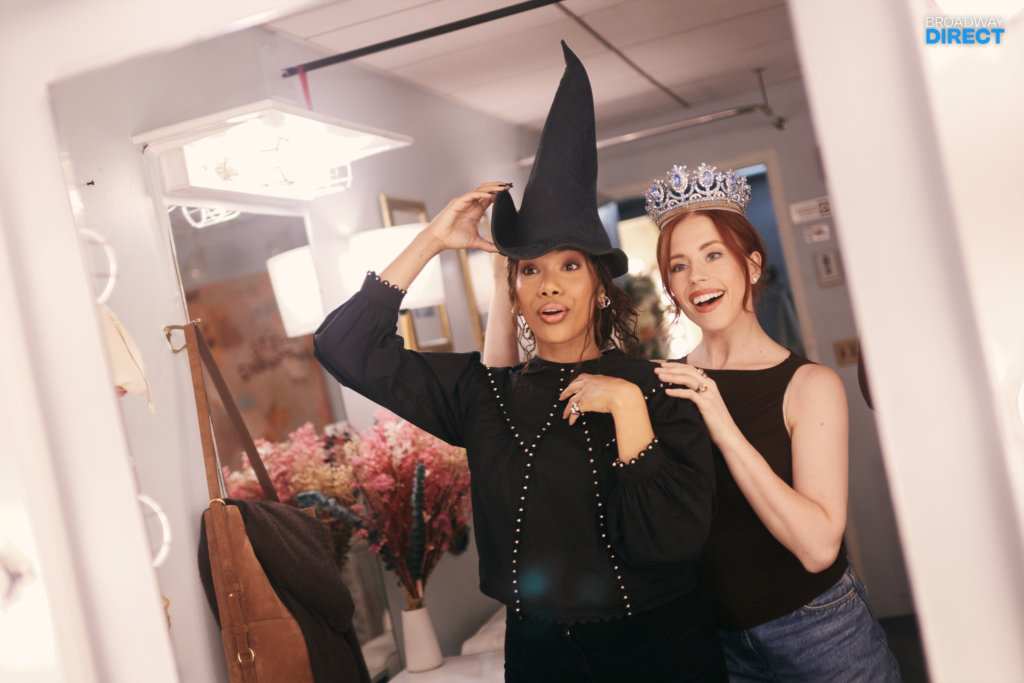
When you first met, were there any key similarities between you two that stood out?
LK: We’re both California girlies, so at that I was like, we have a similar vibe in that way.
AT: And I saw you play Angelica in Hamilton on the tour, so that was kind of like the start of our journey with this, was getting to see you shine in another powerhouse role.
LK: And I remember the first moment I laid eyes on you! Her back was toward me and I was coming up behind her and I was like, “Hi!” And she was like, “Ah!” And I was like, “Hey. We are literally—” And the entire show just flashed before my eyes. I was like, “I know exactly how to play opposite you.” It makes sense.
AT: Yeah! And maybe you’re right, maybe it really is the California thing.
LK: Yeah, we have, like, the chill.
AT: “We should go to the beach after this …”
LK: No, literally!
AT: With a big show like this, Glinda and Elphaba could really go through the whole year never crossing paths other than “For Good” and “Popular” and that’s pretty much it. So to establish that we can have a relationship outside of just the ongoing of the performance was really important to me. And so I feel like that was our way of just setting it up.
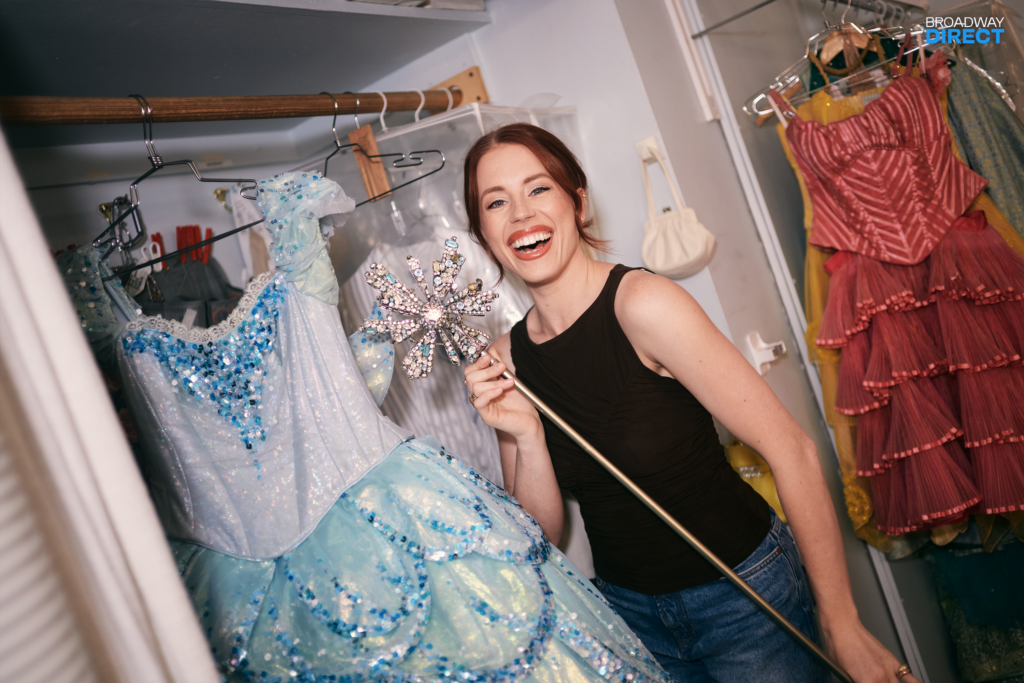
This is a very exciting year for Wicked as a whole as the world anticipates the second part of the film adaptation. Do you sense that excitement from the audiences coming to see the show now?
LK: Oh yeah. It’s incredible, because at this point in the Wicked movie process, some of these audiences haven’t even seen the second half of the story. So I feel like the energy in the Gershwin as of late has just been like at the edge of your seat. There’s so many plot points that people cannot anticipate.
AT: I’ve even noticed a difference from performing the show before the first movie came out. The audiences were coming because they already knew Wicked, and they already loved it. And so, since the first movie’s come out, I feel like there’s this whole new audience of a new Wicked generation of people who, till this day, don’t know how it all ends!
You hear the dots connect in the audience and it’s, like, really, really fun to be on stage in that moment and be like, “You catch that, everybody? See what’s going on here?” It’s very funny.
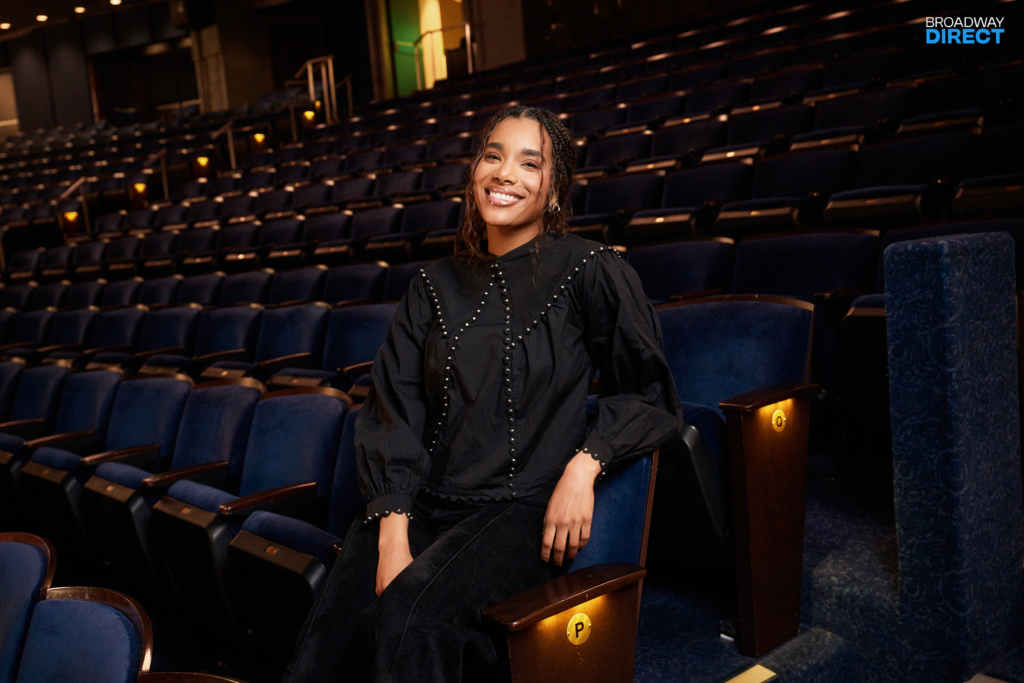
What are you two most excited to see in Wicked: For Good?
AT: I’m excited to hear the vocals. They’re songs that we all know and love, but I know that that cast is going to put on such a new tender spin to the vocals. And I’m excited to see, without spoiling anything, some of the transformations up close because there’s some theater magic, but even in the theatre, you’re sitting many feet away, and to get a close-up view of these characters’ transformations … I’m really looking forward to it.
LK: I’m also excited to see how Glinda and Elphaba’s relationship transforms in this second half of their story. They did such a beautiful job in the first movie with their connection, and I’m so curious to see how that changes with more conflict.
AT: And Jonathan Bailey … Any scene he’s in, I’m looking forward to it. [Laughs.]
LK: And shout out to Jon Chu, because, huh! Another California homie. Incredible, and we can’t wait to see his vision.
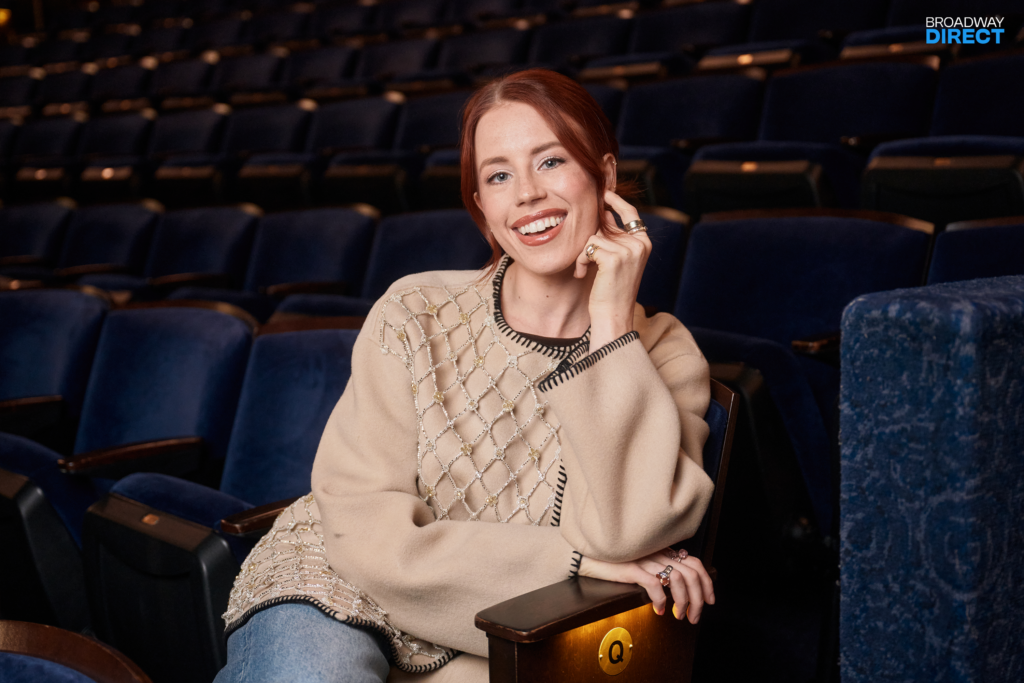
What’s your favorite moment to perform each night?
AT: I know Lencia’s favorite moment, and you can correct me if I’m wrong, but I don’t think I’m wrong, is “No Good Deed.” Because she is, through and through, a “No Good Deed” Elphaba. You sing the heck out of that song. She delivers it with so much gusto and power.
LK: Aw, thanks! Well, she’s right. I love “No Good Deed.” I mean, it’s the biggest song of resignation for the character in response to the world’s pressures, and she kind of just chooses to be who she wants to be, and I just feel like that’s the closest to herself she is in the whole story. So, I really resonate with it.
AT: My favorite part changes. It kind of depends on the vibe of the day, depends where my voice is at, but, like, acting-wise, consistently, I love singing “No One Mourns the Wicked.” It’s the start of the show. Glinda, throughout the whole show, has this little tug-of-war going on between what’s true and what she feels in her conscience, and then what she’s performing and what she has to, what she thinks she has to, do. I think that’s a really fun thing to play with. It of course comes up a lot in “Thank Goodness.” I wanna do that song justice. If I’m ever nervous for a vocal thing, that’s when I’m getting nervous. But “No One Mourns the Wicked” is consistently my favorite song.
LK: Wow. Opener. We love to see it!
What would you say is a key trait to your Elphaba and a key trait to your Glinda?
LK: I think my Elphaba is uniquely sensitive and uniquely gritty. I think I’mma leave it at that.
AT: I’m trying to bring as much … human, as much real person to Glinda, because she is so up and down and mercurial that it can kind of feel like this caricature of a person. But these things that she’s saying and expressing throughout the show are very, very real to her. So, I try to maintain honesty as best as I can.
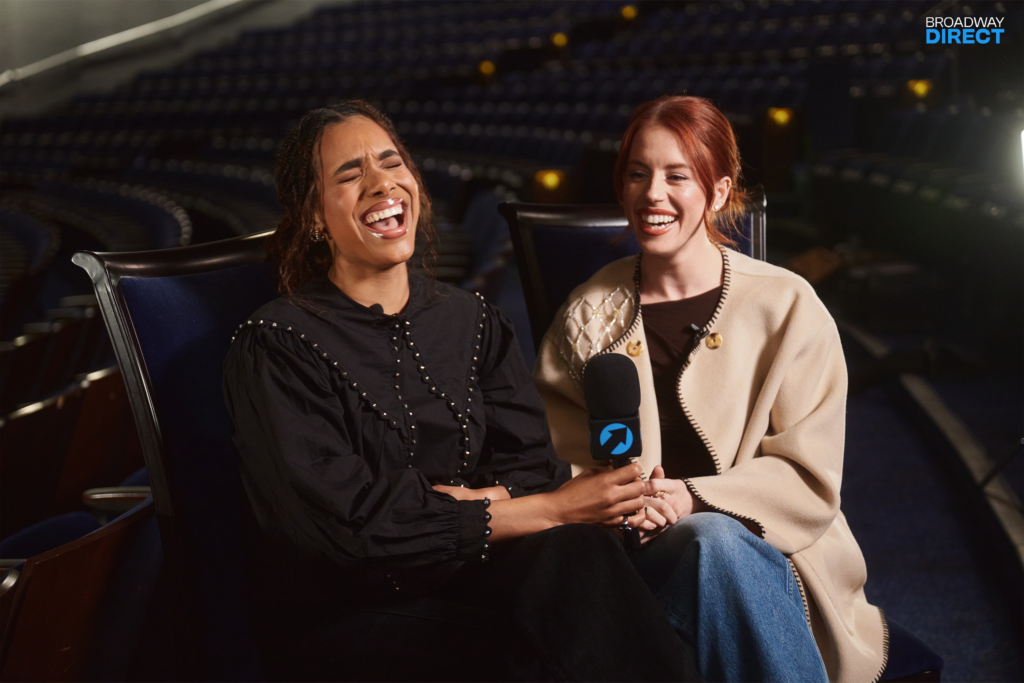
The anniversary is coming up. What does it feel like to celebrate the 22nd year of Wicked on Broadway?
LK: It’s a pretty big honor to be a part of this legacy. Especially as the first Black full-time Elphaba in the role on Broadway. I’m just grateful to be a little peg in the whole thing here. It’s so special.
AT: It’s just such an honor to be a part of everyone’s legacy, and I constantly draw inspiration from the Glindas and Elphabas of 22 years past. So, hopefully, the legacy continues.