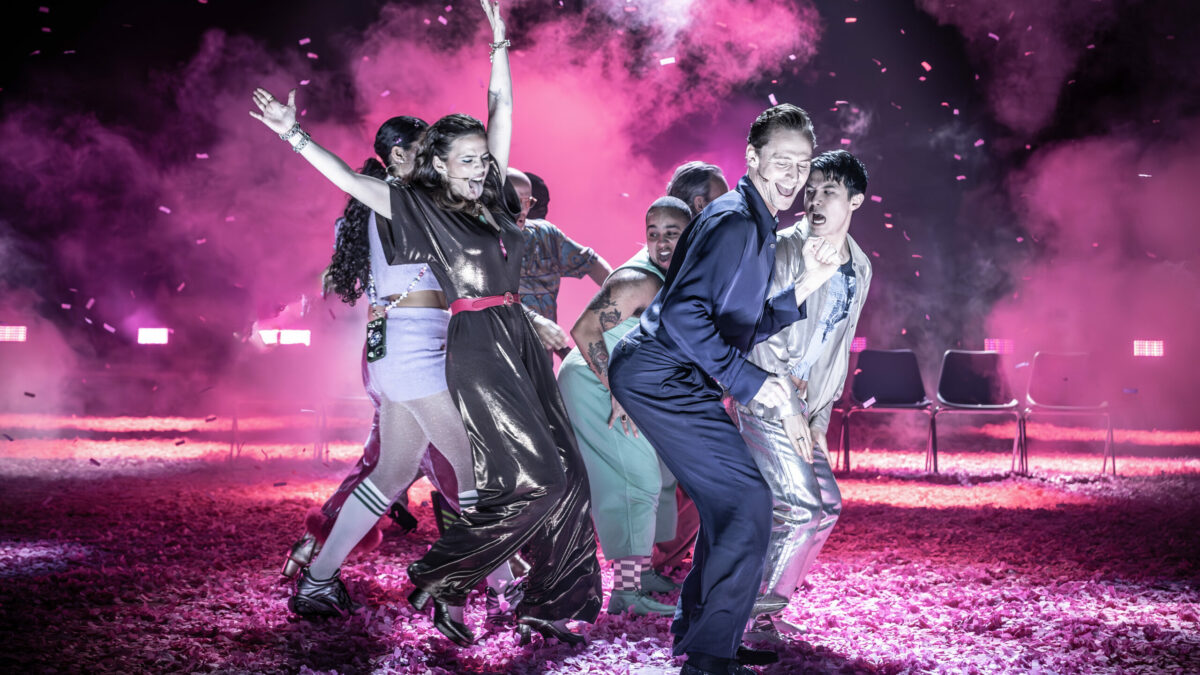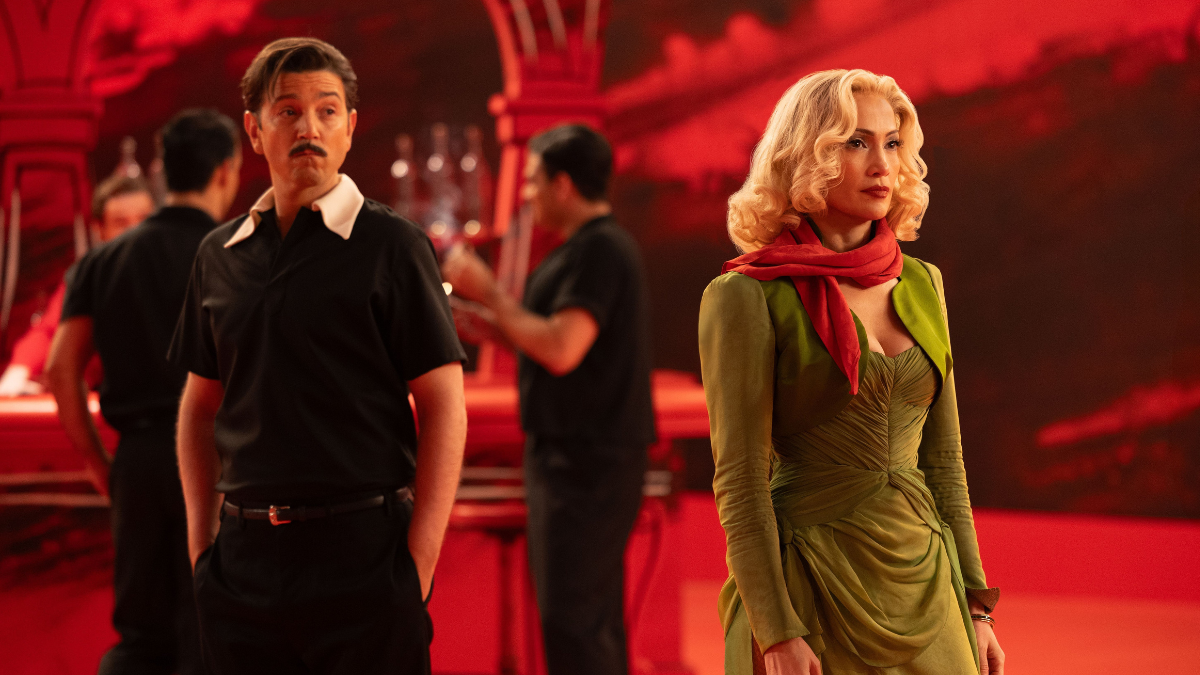
Christopher Scott is caught in a movie-musical spiderweb. Following his impressive “96,000” Busby Berkeley water ballet in In the Heights and putting his creative stamp on Wicked, including the viral “Loathing” sequence, the choreographer was tapped for another production. This time: to conceptualize “Gimme Love,” one of the dance numbers in the film version of Kiss of the Spider Woman starring Jennifer Lopez.
The John Kander and Fred Ebb musical is based on the 1976 Manuel Puig novel and subsequent 1993 Broadway production starring Chita Rivera. The story follows two men — Luis Molina (Tonatiuh) and Valentin Arregui Paz (Diego Luna) — in an Argentinian prison who pass the time in their cell by Molina recounting the story of his favorite Hollywood movie, Kiss of the Spider Woman.
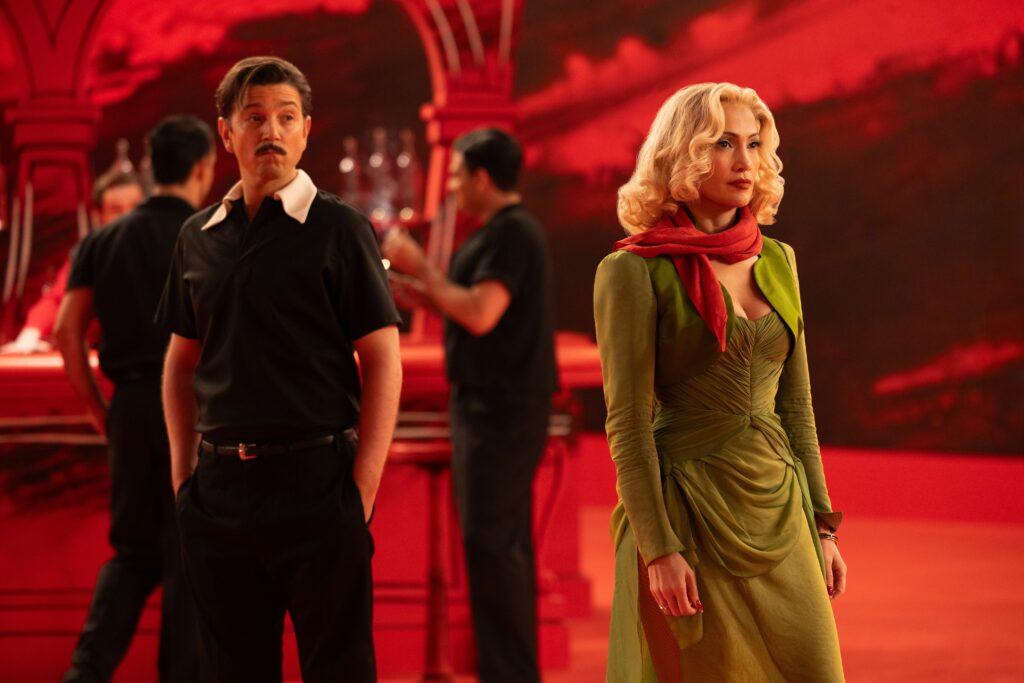
“Gimme Love” is one of the big fantasy musical numbers that the two prisoners imagine. Aurora (Lopez) is drugged and flirts with the men in the bar in order to protect her lover, Armando, from a deadly kiss. It mirrors what’s happening in real time within the confines of their prison cell.
Broadway Direct spoke with Scott all about J. Lo’s impressive work ethic, a nod to the late Chita Rivera, and the 1939 inspiration behind his choreography of “Gimme Love.”
How did this project come about?
[Director] Bill Condon gave me a call one day. I was in El Salvador for a wedding with a friend. It was my first vacation in a really long time. He said he would really love to come in and work on this film and bring me in as a piece of this puzzle. I read [the screenplay] and looked at the old movie and the footage of Chita Rivera. Three days of vacation turned into, “All right, let me dive in.” As I read the script, I was like, I love it so much. It’s beautiful. I called him back. I was like, “I’m down, if you can wait three days.” And he was like, “We’ll make it work. I’ll see you in New York.” And it was like, boom.
How come you were tapped to do “Gimme Love” when we have Sergio Trujillo choreographing the rest of the movie?
Sergio had been working on the film for months. I think production started looking at the schedule wondering how they were going to get this done. Because Jennifer was in Los Angeles, and Diego [Luna] was in Spain. Jennifer was rehearsing for her tour at the same time. There’s no way to accomplish all this work unless they brought in someone, and they thought I was the right person for “Gimme Love.” It was kind of a blessing for me.
Was Cyd Charisse in Singin’ in the Rain a big inspiration behind the number? The green dress stood out to me.
Aesthetically, it matched Singin’ in the Rain. But that’s not really the one that we used as the choreography reference. “Baby You Knock Me Out” in It’s Always Fair was really the inspiration for this song.
What did you do as far as researching that era of 1939?
Bill is so passionate about the era. I think that’s really what stuck out to me the most and which really got me excited to be a part of this film. I love people that have a vision like that and have a really strong connection to style and tone. He was very clear he wanted it to feel like 1939. We’re talking about a very specific period, so the references that we were using got very small, and Cyd Charisse was a big one for me. The first thing I had to do was really dive into the air and the style of movement back then, because we really wanted to eliminate any movement that didn’t feel in existence back then.
There’s a bit with J. Lo on top of the bar dancing, surrounded by men. I took that as an homage to Chita Rivera in Bye Bye Birdie during the “Shriner’s Ballet.”
That was! Oh, you’re good!
That’s why you’re talking to me! What was it like to work with J. Lo on this number and how she learned the choreography?
She’s the hardest working woman in Hollywood. It’s very rare that you have your star actor for an eight-hour dance rehearsal. Somebody is usually standing in for them. You do a lot of work with the dancers, and then they come in for a couple hours, maybe half a day if it’s a hard number. But with Jennifer, it was like eight hours a day. She was there in the room over and over, doing it over and over again. She’s very dedicated to dance and making sure that she gets the dance right. It really made me proud and happy to be a part of this thing. It felt good to be in a room with her and diving in.
Did she do all of the dancing?
All the dances. You’re not putting anyone in her spot because she has to do it and get it right. We really built the number with Jennifer in Los Angeles. I had an amazing team of associate choreographers: Danielle Sten-Guillermo and Eddie Torres Jr., who I met doing In the Heights, with all the Latin style. Any kind of Latin feel to this moment was all through Eddie.
How long did it take you to rehearse this and then film it?
It was two or three weeks of rehearsal in L.A. and a month filming in Jersey City, New Jersey.
What do you think was the most challenging part for her?
We’re telling a very complicated story already with the acting scene that’s happening, that they’re not going to shoot until they get to Argentina. [Her character’s] been drugged at this moment. We’ve jumping ahead and trying to figure out what Diego and Tonatiuh are doing in the prison. We’re connecting those dots. But how does that look in a movie in the 1930s? Trying to stay in this world was challenging.
How was choreographing this stylized number different from In the Heights, Wicked, or even Step Up 2: The Streets?
I personally love a focus on a language, because to me, dance is a language that you’re speaking in. This one was very guided by the era, and you stay true to it. I love that, because then it gives you something to research. It gives you something to honor.