For the past 10 years, Jacob Dunne has been one of the most front-facing case studies in the efficacy of restorative justice. In 2011, the Nottingham, England, native was convicted of manslaughter for killing James Hodgkinson with one unprovoked punch, spent 14 months in prison, and when he was released, in his words, he “had become an even worse person than when I went in, with no hope for my future.”
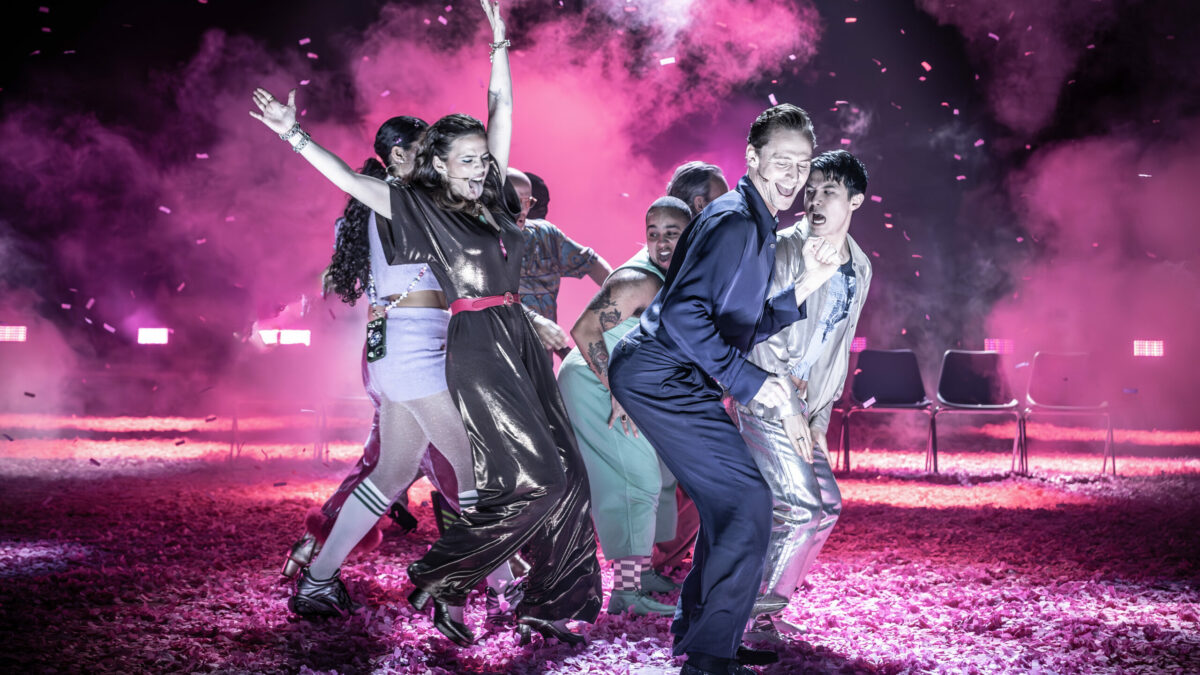
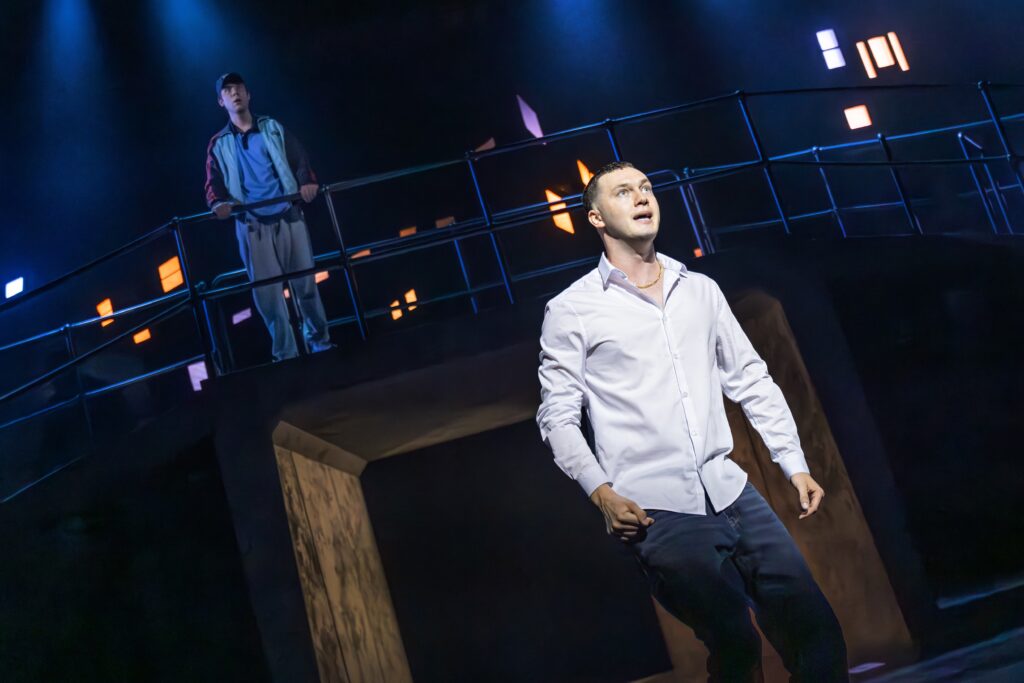
Through the process of restorative justice — communicating with his victim’s parents, repairing harm, taking accountability — Dunne rebuilt his life. He documented his rehabilitation in the 2022 memoir Right From Wrong, which inspired James Graham’s play Punch, now running on Broadway at the Samuel J. Friedman Theatre as the U.K. hit simultaneously opens in the West End.
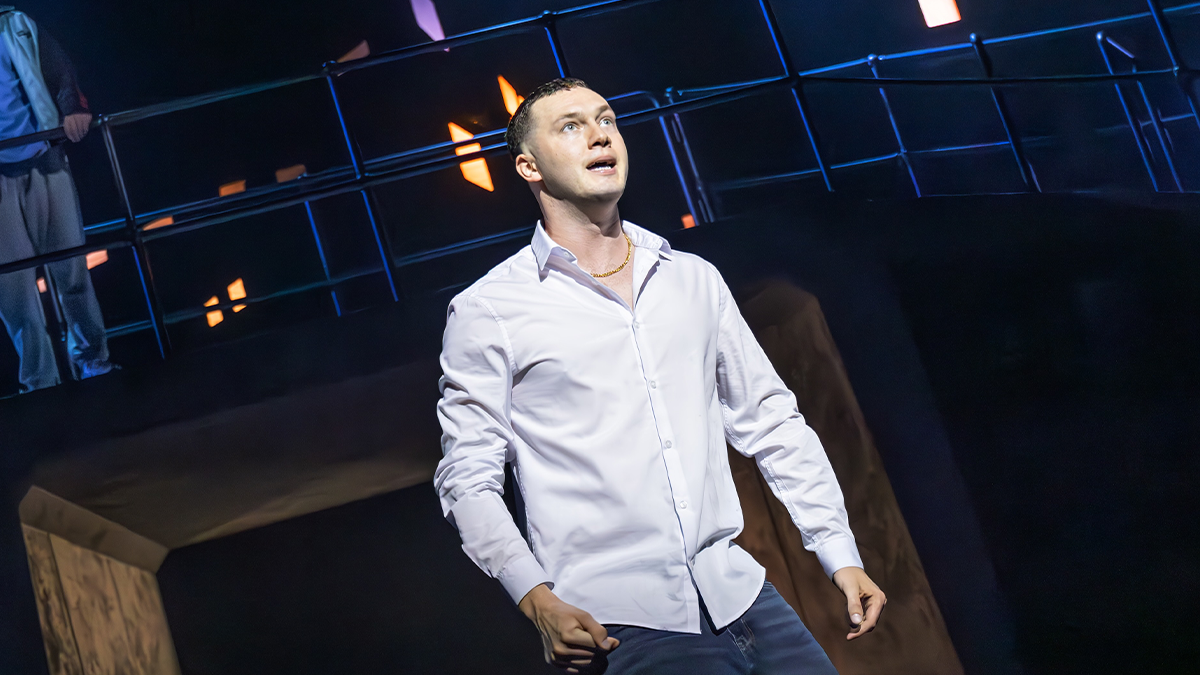
Will Harrison makes his Broadway debut as Dunne, the play’s narrator who both recounts and relives every painful memory in this real-life redemption story. Harrison, a 2019 Carnegie Mellon grad, is becoming an increasingly familiar face, with breakout roles in screen projects including Daisy Jones and the Six and the Bob Dylan biopic A Complete Unknown. And still, he considers the stage “that thing that I know in my bones more than anything.” Read more about his time with Punch, a theatrical homecoming, and an opportunity to be part of a movement that turns darkness into light.
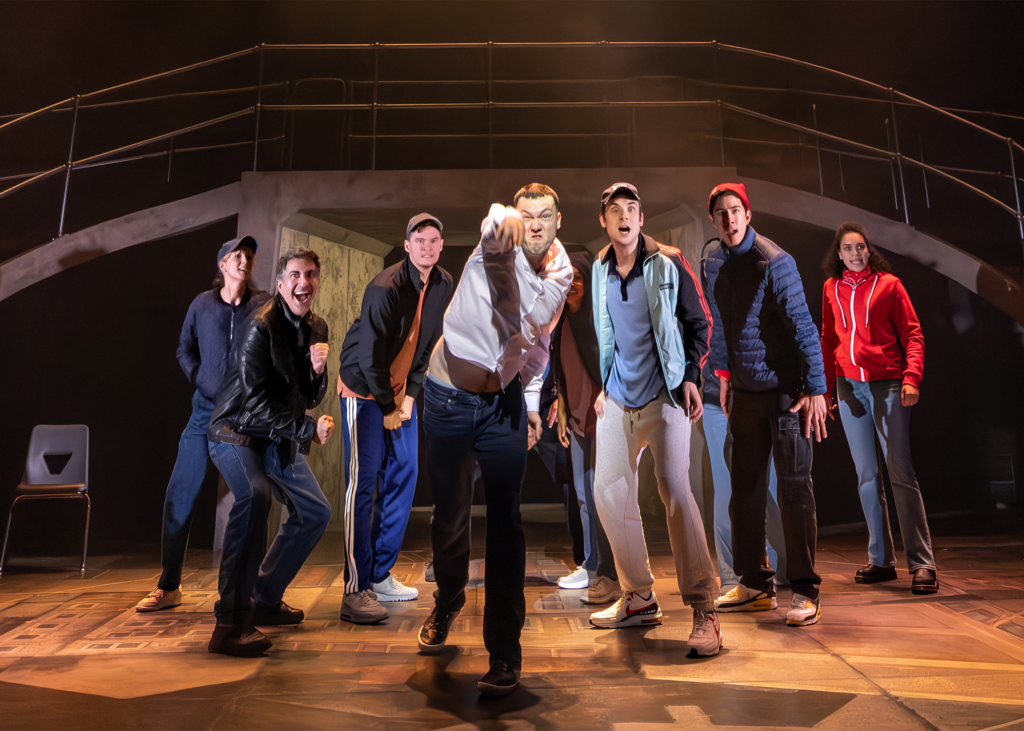
Jacob is an enormous role that doesn’t give an actor much downtime. Did the prospect of joining the play on Broadway ever feel daunting?
It certainly was a lot to take on. But that’s just a wonderful challenge as an actor, so it was kind of a double-edged sword. I think I almost didn’t quite realize the task at hand until we got into the room. I’d pause for a moment and then something else would happen and I’d jump right back up and be back in it. It was like, “Oh, OK, this is kind of nonstop.” But it’s such a great challenge, so it was something that I was definitely up for.
You got to spend some time with the real Jacob Dunne. How did that affect your performance?
He had a huge impact on how I play the character. I was fortunate enough to be able to go up to Nottingham and spend the day with him and kind of tour around to all the different places where the play takes place. When I say I go down to the river and sit where he gets the phone call that the police are at his house, I sat on the river right there with him and talked about that moment. And to have him as a character reference and collect some mannerisms, it’s really invaluable. But then you also have to own the fact that it’s you in this version of the story and bring some of your own experiences to the role. That was kind of the second part of the process.
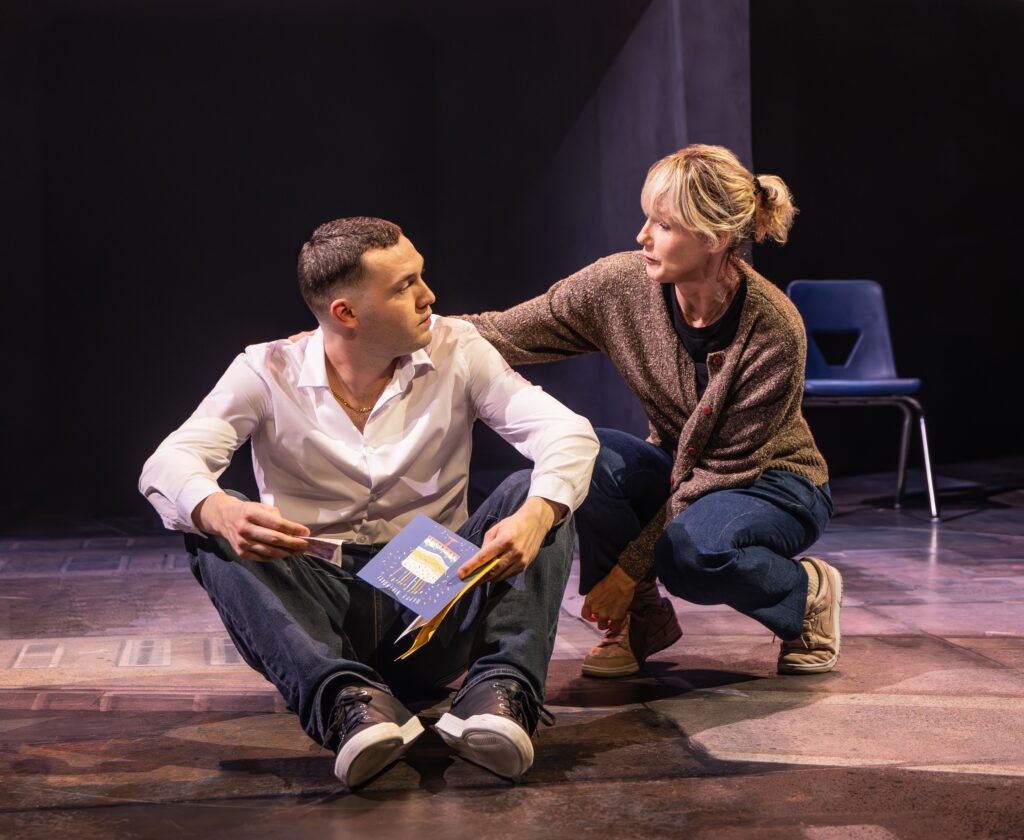
You’re essentially playing two Jacobs: the present-day one, who’s narrating from a perspective of growth, and the old one who committed the crime at the center of the story. How have you molded those two versions of him?
That was such an interesting thing to craft. I felt so connected to this more calm and mature version of Jacob, but walking around The Meadows and seeing where he grew up, and even seeing some of the kids who were running around, you really got a sense of what that journey might have been. I knew that for whatever place he’s in now, there needed to be, for as long as possible, a sense of uncertainty of whether or not he’s going to get there, whether or not this guy is gonna come around and own up to what he’s done. Making that early version as unpredictable and volatile as possible was really important for then landing the plane at the end.
You’ve had an exciting few years, first getting launched into Hollywood as ’70s rock star Graham Dunne in Daisy Jones and the Six. How do you look back on that experience?
I don’t know if I’ll ever experience something like that again — to have five to six months of rehearsals for a film project is kind of unheard of. But it did take a minute to get rolling. It came about a year after I got out of school, I moved to L.A. for that, and then COVID delayed it for a full year. It’s so interesting coming out of a theater school, because you really feel confident in acting ability just because you’ve been doing it every day. But the thing that is impossible to prepare you for is the dynamics of a film set. You’re like, “Oh, there are people in charge of the plants that you see on camera?” Of course there are! There are people in charge of everything you see on camera. I really grew to love that process as something entirely separate from theater through that first gig.
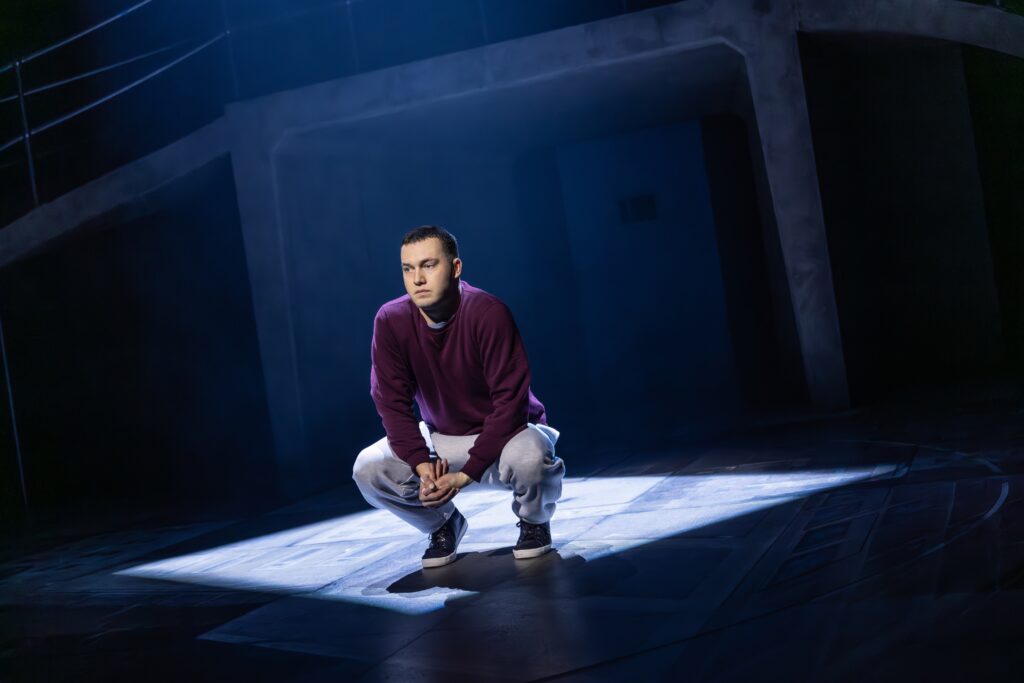
And then you followed the music thread to play Bob Neuwirth in A Complete Unknown. Did you anticipate music being such a big part of your career?
I think I knew that it was a strength of mine. The ways that it’s come to fruition have been above what I ever could have expected, though. I don’t know if I would have been on that set had I not had some musical ability going in. James [Mangold] has been a true North Star director for me, so to have the opportunity to be on that set was a whole other lesson in film and a really amazing experience. I hope I get to work with him again.
Punch is your Broadway debut, but you made your New York stage debut in 2023 with the Lincoln Center Theater production of The Coast Starlight. Having trained in theater, did being on that stage feel like a big career milestone?
Yeah, it’s always been a huge goal. It’s interesting: You do so much theater in high school and in college that the mystery of film and television is kind of calling you. But then when the opportunity came around to do that show, I think I initially underestimated how good it would feel just to return to that thing that I know in my bones more than anything. And at a place like Lincoln Center. I mean, just going to work there every day is a total dream.
Who was the performer you watched growing up that made you say “I want to do that”?
One of the biggest actors for me is Christian Bale. I was initially obsessed with Batman Begins. I would watch that over and over again. Then I started watching other performances of his and I remember not realizing he was [Welsh] for the longest time. [Laughs.] Every role that he did he was entirely transformed. It never felt gratuitous or Method. It felt like, “If I’m gonna be this guy, I have to be this guy and do it 100 percent.” That was a huge inspiration.
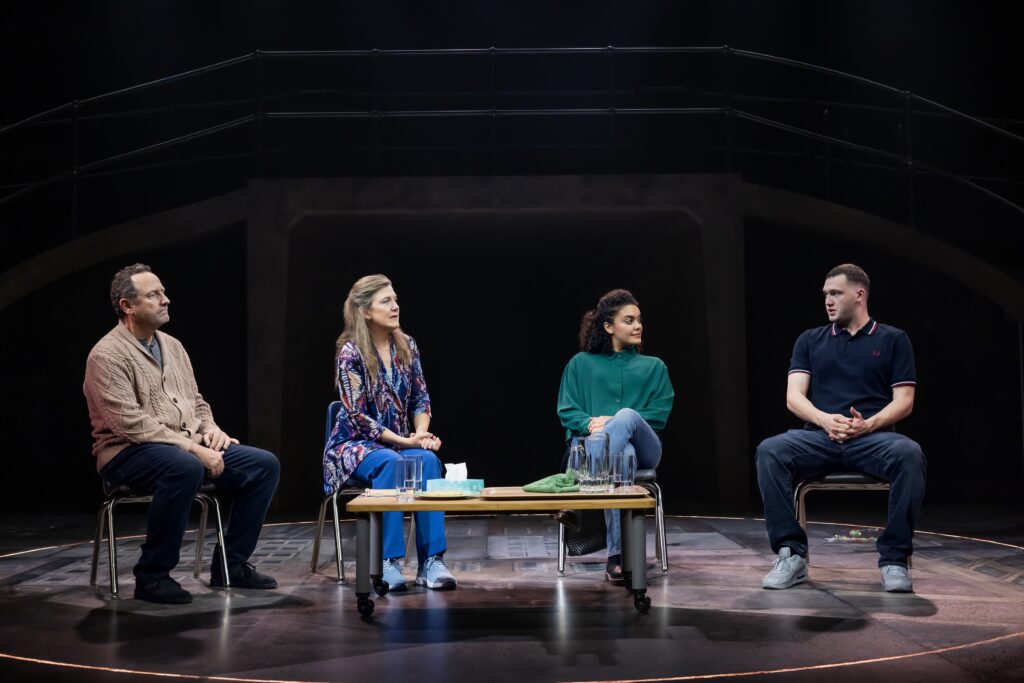
You have that level of commitment throughout Punch, but especially in the climactic Act Two scene where we see Jacob have his first face-to-face meeting with Joan and David, his victim’s parents. Tell me about how it feels to live that scene every day.
It’s such an interesting scene. I remember talking to James [Graham] about it because we explain to the audience what a restorative justice meeting might look like. We kind of hit the bullet points and say, “This is what you’re about to see.” And then still, through Adam [Penford]’s direction, it feels like you’re on this razor’s edge and you don’t know if this thing is gonna work out. I remember early on, a note coming in that was like, “You can’t look at them.” It’s definitely my instinct as an actor to listen and to react, but I had to work to ratchet up the stakes of just what it’s like for Jacob to be in that room. And it was wonderful to have Joan and David and [Dunne’s restorative justice facilitator] Nicola here in New York as a resource for what that day felt like. Every night, stepping into that circle, you have the groundwork laid but you really don’t know quite how it’s gonna go. It’s nerve-racking, but really thrilling.
Punch is a play that’s not shy about its goal to educate audiences about restorative justice. How do you feel about being part of that mission while it has this Broadway platform?
I think it’s such a wonderful opportunity. Anything you are involved in, different people with different stories are gonna take away different things. But having such a clear objective in a show is a really wonderful thing. Going into the rehearsal process, I knew so little about restorative justice. Now, I can’t believe that it’s not the way we do it all the time. It really seems like there is no other way than asking who was harmed, what do they need, and how can we heal all parties moving forward — instead of the punitive, finger-wagging way that our justice system works. If audiences can take away a curiosity about that and support organizations that are proponents of this method, I think that would be the biggest win for us as a cast and company.